.svg)
Expanding your successful childcare program into a franchise represents one of the most significant growth opportunities in early childhood education. With the growing demand for quality care, daycare franchise opportunities offer substantial potential for program owners ready to scale their impact and income.
However, franchising requires more than just replicating your current model. You'll need careful financial planning, standardized operations, and the right systems to maintain quality across multiple locations.
This article walks you through the essential steps to assess your readiness, create expansion budgets, and build the infrastructure necessary for successful franchise growth.

Assess your program's financial readiness
Building a strong financial foundation is the cornerstone of successful franchising. Before considering expansion, your current childcare program needs consistent profitability and diverse revenue streams that can be replicated across multiple locations.
Start by evaluating your current income sources and identifying opportunities for growth within your existing program. Consider these proven revenue enhancement strategies:
- Partner with local businesses that serve families, such as pediatric offices, family photography studios, or children's clothing stores
- Host paid workshops for early childhood educators in your community, sharing your expertise while generating additional income
- Offer supplemental programs like after-school care, summer camps, or weekend activities that extend beyond traditional daycare hours
- Provide enrollment discounts for families with multiple children to increase capacity utilization
- Host educational seminars for families on child development topics, creating value while building stronger relationships
These revenue diversification strategies not only strengthen your financial position but also demonstrate the scalability essential for franchise success.
An all-in-one software like brightwheel can help track and manage these various income streams effectively, providing the financial clarity needed for expansion planning.
Your financial readiness assessment should also include a thorough review of your current profit margins, cash flow patterns, and operational efficiency metrics. Programs ready for franchising typically maintain profit margins of 15-20% and demonstrate consistent monthly cash flow for at least 18 consecutive months.
How to maximize income without compromising quality
Sustainable franchise growth requires increasing revenue while maintaining the high standards that made your original program successful. This balance is crucial because quality compromises can damage your brand reputation across all locations.
Focus on these key areas to optimize income while preserving excellence:
- Refine your curriculum regularly by updating content to align with state standards and individual children's learning needs. Use ongoing assessments to personalize teaching strategies and demonstrate measurable outcomes to families
- Invest in comprehensive staff training that goes beyond basic certification requirements. Professional development improves care quality, enhances your program's credibility, and reduces costly staff turnover
- Automate administrative tasks using integrated childcare management systems. Tools like brightwheel handle billing, record keeping, and payroll automatically, freeing up valuable time to focus on growth activities and direct child interaction
The key is implementing systems that work harder so your staff doesn't have to. When administrative burdens decrease, educators can dedicate more energy to creating exceptional experiences that justify premium pricing and generate positive word-of-mouth referrals.
Quality maintenance also depends on consistent measurement and improvement processes. Regular family feedback, staff evaluations, and outcome tracking ensure standards remain high as you scale operations.
How to grow from a single childcare program to a franchise
Successful franchising requires transforming your unique childcare program into a replicable system that delivers consistent experiences across all locations. This standardization process involves several critical phases, each requiring careful planning and execution.
Create a budget for expansion
Franchise expansion demands two distinct budgeting approaches: individual location budgets and comprehensive franchise-wide financial planning. Each new location requires substantial upfront investment, while the overall franchise needs ongoing operational funding.
Account for these essential cost categories in your expansion budget:
- Construction and setup costs including land acquisition or lease deposits, building renovations, furniture, playground equipment, and comprehensive security systems
- Franchise and administrative fees covering initial franchise development costs, legal and accounting services, trademark registration, and ongoing royalty structures
- Regulatory compliance costs for licensing, permits, health department approvals, and mandatory inspections required in each new location's jurisdiction
Most successful franchise expansions require $150,000-$300,000 per location, depending on facility size, local real estate costs, and regulatory requirements. Plan for 6-12 months of operating expenses as working capital while new locations build enrollment to full capacity.

Free, Printable Annual Budget Planner
Use this planner to create a high-level budget or business plan for your childcare center.
Implement a phased expansion strategy
Rather than attempting rapid multi-location launches, successful childcare franchises typically follow structured, phased approaches that ensure quality and sustainability.
Consider the proven expansion model used by "A Place to Grow," which divides franchise development into three distinct phases:
- Phase 1: Foundational training focuses on developing comprehensive administrative, operational, and marketing skills. New franchisees spend 2-3 weeks learning systems, policies, and brand standards before opening their location.
- Phase 2: On-site support provides one full week of hands-on training from experienced franchise professionals. This intensive period covers daily operations, staff management, and family communication protocols in a real childcare environment.
- Phase 3: Ongoing guidance establishes continuous support systems for operations, marketing, purchasing, and quality assurance. Regular check-ins, quarterly business reviews, and annual conferences maintain consistency and provide ongoing education.
Maintain brand and curriculum consistency
Franchise success depends on families receiving identical high-quality experiences regardless of which location they choose. This consistency builds trust, simplifies marketing, and creates operational efficiencies across your entire network.
Brand consistency encompasses visual identity, communication standards, facility design, and service delivery protocols. Every location should use identical signage, marketing materials, enrollment processes, and family communication methods.
Curriculum standardization ensures all children receive the same educational foundation and developmental support. This includes standardized learning materials, assessment tools, activity schedules, and outcome measurement systems.
Using a single management software platform like brightwheel across all franchise locations helps maintain operational consistency while providing centralized oversight capabilities. Uniform systems simplify staff training, reduce operational errors, and enable efficient multi-location management.
Integrate technology to improve efficiency
Technology integration becomes essential when managing multiple childcare locations simultaneously. The right systems enable centralized oversight while maintaining local operational flexibility.
Key technological benefits for franchise operations include:
- Automated billing and invoicing across all locations with consistent payment terms and collection procedures
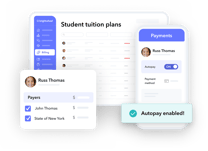
- Uniform family payment options including autopay systems that reduce administrative burden and improve cash flow
- Instant access to financial reports for individual locations and franchise-wide performance metrics
- Centralized communication systems that maintain brand consistency while enabling location-specific messaging
Brightwheel's integrated platform exemplifies how comprehensive technology solutions can streamline franchise management while improving family satisfaction and staff efficiency.
Plan for staffing and professional development
Successful franchise expansion requires careful attention to staffing strategies that can be replicated across multiple locations while maintaining quality standards.
Essential staffing considerations include:
- Hire appropriate staff numbers to meet or exceed state-mandated staff-to-child ratios while providing superior care experiences
- Offer competitive compensation packages including salaries, benefits, and professional development opportunities that attract and retain high-quality educators
- Provide comprehensive ongoing training ensuring all staff across the franchise network meet consistent quality standards and maintain current certifications
Establish a system for continuous quality improvement
Maintaining excellence across multiple locations requires systematic feedback collection and response processes. Successful franchises actively seek input from families and staff, then implement improvements consistently across all locations.
Final thoughts
Expanding your childcare program into a franchise represents a significant opportunity to serve more families while building substantial long-term wealth. Success requires careful financial preparation, systematic operational planning, and unwavering commitment to quality maintenance across all locations.
With proper planning and the right technology tools, program owners can successfully scale their impact while maintaining the personal touch that made their original location successful.