.svg)
Parent satisfaction surveys have become more than just feedback tools—they're strategic assets that can transform your childcare program's growth trajectory. Running these surveys consistently, specifically twice a year, creates a powerful cycle of improvement that drives retention, referrals, and long-term success.
The childcare industry faces unique challenges when it comes to family satisfaction. Unlike other service sectors, childcare programs work with families during emotionally significant moments in their children's development. Expectations run high, concerns can escalate quickly, and communication gaps can lead to unexpected departures. This is where structured feedback collection becomes invaluable.
A well-timed parent satisfaction survey doesn't just capture opinions—it identifies opportunities before they become problems. When implemented strategically, these surveys create a feedback loop that strengthens family relationships, improves program quality, and generates authentic testimonials that fuel growth.
Why frequency matters: Once a year isn't enough
Annual surveys often miss critical shifts in family expectations and satisfaction levels. Children's needs change rapidly, staff turnover affects family experiences, and program adjustments happen throughout the year. Waiting twelve months to gather feedback means missing opportunities to address concerns when they're still manageable.
A twice-yearly approach ensures you're capturing feedback when it's most valuable. The mid-year check-in allows you to identify friction points before they escalate into withdrawal decisions. The end-of-year reflection provides insights that can inform program improvements and renewal conversations.
Frequent feedback collection also normalizes the process within your childcare program culture. Families begin to see feedback as an expected part of their partnership with your program, not just damage control when problems arise. This cultural shift makes families more comfortable sharing honest input and creates an environment of continuous improvement.
The best timing for parent satisfaction surveys
Strategic timing transforms survey responses from reactive complaints into proactive insights. Here's the optimal schedule for most childcare programs:
|
Timing |
Ideal Context |
Goal of Survey |
Focus |
| Early/Mid Year (January-March or 1-3 months after enrollment | Families have settled into routines | Identify friction points before they escalate | Daily operations, communication, staff interactions |
|
End of School Year (May-July) |
Natural reflection period | Capture wins, testimonials, and renewal likelihood | Overall satisfaction, program impact, future needs |
| (Optional) After Major Program/Staff Changes | Change in leadership, curriculum, pricing, etc. | Gauge reaction and reassure parents their voice matters | Specific changes and their impact on family experience |
This timing strategy ensures you're collecting feedback when families are most reflective and when their responses can drive meaningful improvements.
From feedback to loyalty: How surveys drive retention
The connection between feeling heard and staying loyal is particularly strong in childcare settings. Families who believe their input influences program decisions develop deeper emotional investment in your childcare program's success.
The feedback loop that builds loyalty follows five key steps:
Ask: Deploy thoughtful surveys that demonstrate genuine interest in family experiences.
Acknowledge: Respond to every submission, even if it's just confirming receipt and expressing gratitude.
Act: Implement feasible changes based on recurring feedback themes.
Update: Communicate program improvements back to families, specifically noting how their input drove changes.
Earn: Build trust through this transparent process, creating families who advocate for your program.
Early intervention through surveys significantly reduces withdrawal risk. When families see problems being addressed promptly, they're more likely to work through challenges rather than seeking alternatives. This proactive approach transforms potential departures into strengthened partnerships.
Turning survey results into referrals, reviews, and testimonials
Positive survey responses represent untapped marketing potential. Families who take time to share glowing feedback are already advocates—they just need the right invitation to share their enthusiasm publicly.
When families submit positive responses, follow up with specific requests that feel natural and appreciative. A simple message like, "We're thrilled you're loving your experience with our program. Would you mind sharing your thoughts in a Google review to help other families discover what we offer?" often yields immediate results.
Consider incentivizing referrals immediately after receiving positive feedback. The emotional high from sharing positive experiences is the ideal moment to introduce referral opportunities. Families are most likely to recommend your program when they've just articulated what they value about it.
Transform private praise into public advocacy by requesting permission to use positive quotes in marketing materials. Many families are happy to share their experiences when asked respectfully and given control over how their words are used.
What to do with negative or neutral responses
Negative feedback shouldn't trigger defensive reactions—it should activate retention rescue protocols. These responses represent families at risk of leaving and offer your last opportunity to preserve those relationships.
Reach out personally to every family who shares concerning feedback. Schedule face-to-face conversations to understand their specific issues and demonstrate your commitment to solutions. This personal attention often surprises families who expect their concerns to disappear into administrative processes.
Offer concrete improvements based on their feedback, even if solutions require time to implement. Families often stay when they see genuine efforts to address their concerns, even during transition periods. The key is transparent communication about timelines and progress updates.
Counter-intuitively, families who experience problems that get resolved often become more loyal than families who never encounter issues. Successfully navigating challenges together builds stronger relationships and creates powerful testimonial opportunities.

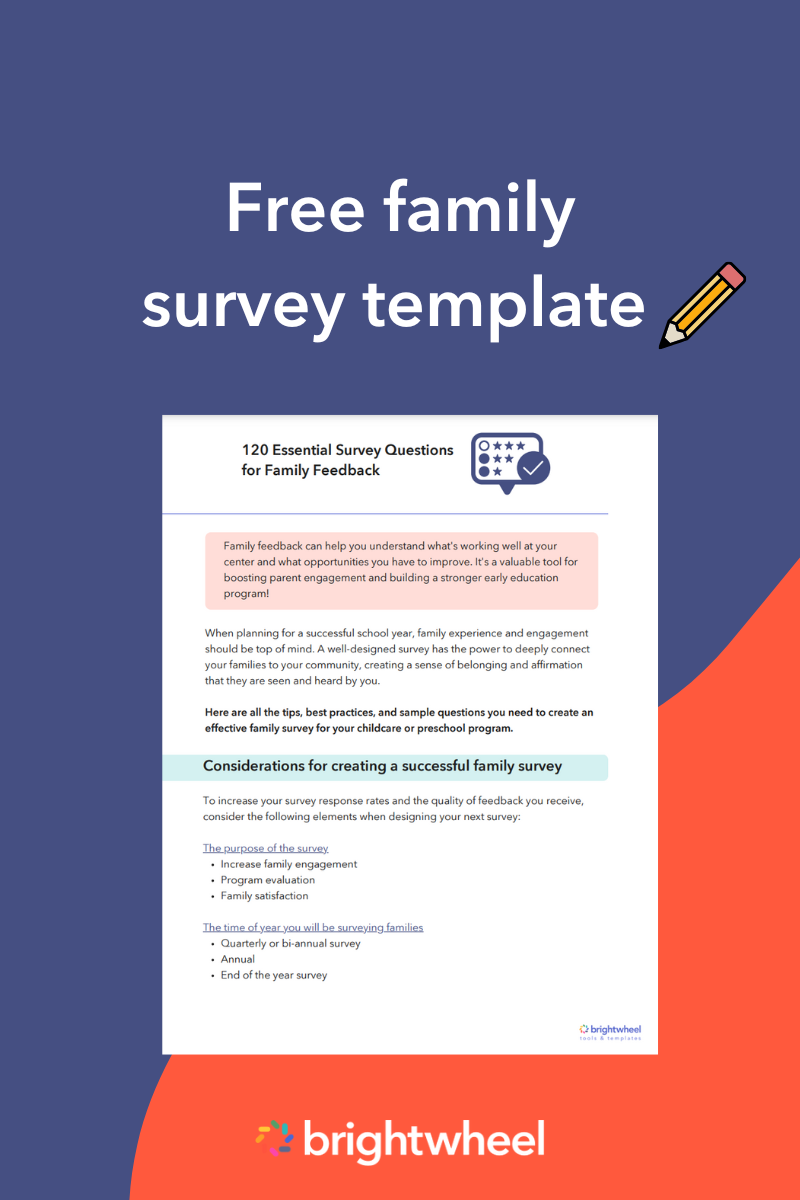
120 Essential Survey Questions for Family Feedback
Use this free guide to boost parent engagement and build a stronger early education business.
How to make consistent surveys easy
Digital survey platforms eliminate most administrative barriers to regular feedback collection. Tools that integrate with your existing childcare management system can automate distribution, track responses, and organize results without adding to staff workload.
Paper surveys still work for families who prefer traditional communication, but digital tools offer significant advantages for consistency and analysis. Automated reminders ensure higher response rates, and digital responses can be instantly categorized and acted upon.
Consider platforms that allow anonymous submissions alongside identified responses. Some families share more honest feedback when they don't worry about being identified, while others appreciate the opportunity for direct follow-up conversations.
The key is choosing a system that makes survey creation, distribution, and analysis simple enough to maintain twice-yearly consistency without overwhelming your administrative capacity.
Make parent satisfaction surveys part of your retention strategy
Parent satisfaction surveys can integrate into your broader retention strategy rather than existing as isolated administrative tasks. When surveys become part of regular family engagement, they contribute to the relationship-building that keeps families enrolled long-term.
Consistent surveys can help you identify trends, track progress on previous concerns, increase referrals, and demonstrate ongoing commitment to family satisfaction. Families want to contribute to your program's success, and these surveys offer a structured way for their voices to shape your program.