.svg)
Running a successful childcare program demands more than just engaging activities and caring for children; it requires meticulous compliance. Essential childcare documents form the backbone of a quality operation, ensuring your program meets regulatory standards while protecting both your staff and the families you serve.
Proper documentation brings peace of mind to everyone involved. Families trust that their children are in safe, regulated environments, and staff feel confident following established protocols. Program administrators can then focus on providing exceptional care, free from compliance worries. While managing numerous childcare documents might seem overwhelming, understanding which are vital and how to organize them effectively makes the process much more manageable.
This article will guide you through the essential childcare documents you need, tips for staying organized, and strategies to streamline your documentation process.
Essential childcare documents every program needs
Licensing and accreditation documents
Licensing documentation forms the core of your childcare program's compliance. While state licensing requirements vary, all programs must obtain proper licenses before accepting children. These documents confirm your facility meets minimum safety standards, staffing requirements, and operational guidelines.
Key practices for licensing documents:
- Display your current license prominently for families to see.
- Keep copies of all licensing correspondence, renewal applications, and inspection reports.
- Maintain a tracking system for renewal dates, as many states require annual renewals.
Accreditation documents, though often voluntary, demonstrate your commitment to exceeding minimum standards. Organizations like the National Association for the Education of Young Children (NAEYC) offer accreditation that signals quality to families. Store all accreditation materials, assessment reports, and renewal documentation together for easy access.

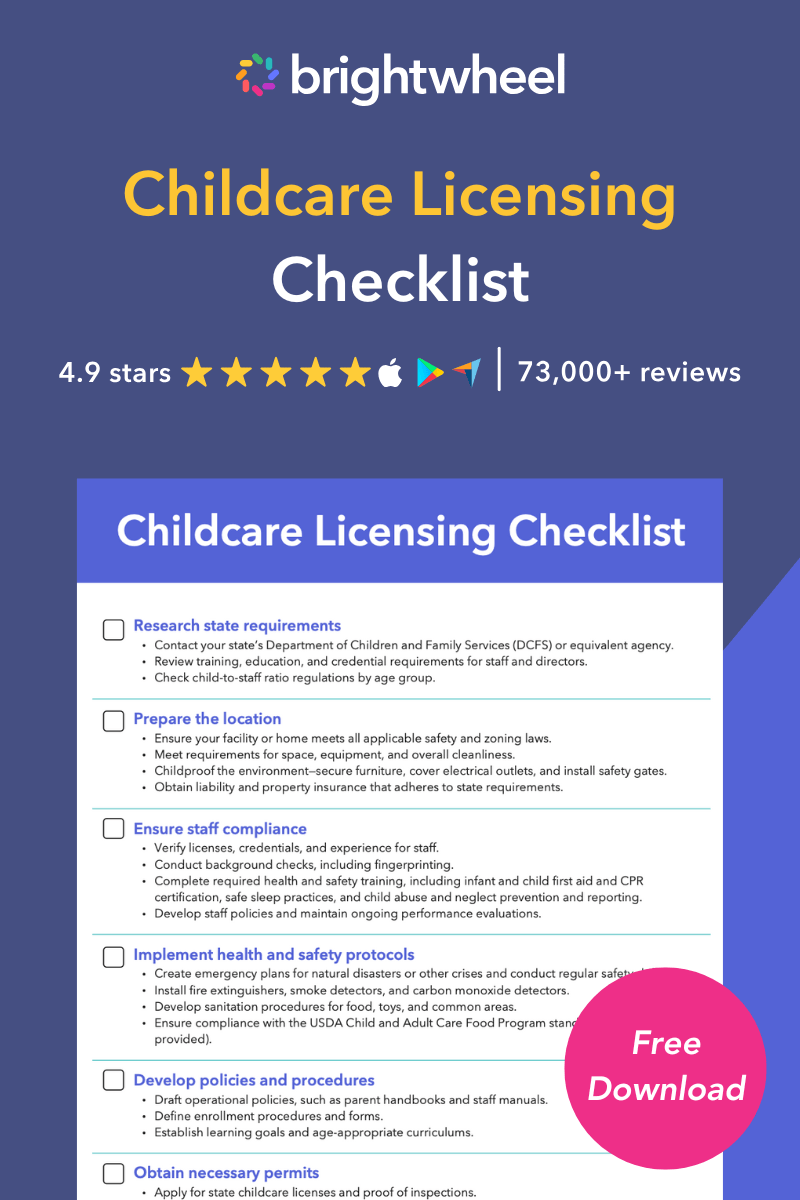
Childcare Licensing and Compliance Checklist
Download this free checklist to simplify the childcare licensing process.
Child enrollment records
Complete enrollment records contain critical information needed for daily operations and emergency situations. Each child’s file must include:
- Emergency contact information
- Medical history
- Allergies
- Dietary restrictions
- Authorized pickup persons
Ensure these documents are quickly accessible to staff.
Update enrollment records regularly as families' circumstances change. New phone numbers, address changes, or modifications to authorized pickup lists require immediate documentation updates. Outdated information can create serious safety risks during emergencies.
Privacy considerations are paramount when handling enrollment records. Store these documents securely and limit access to authorized staff members only. Many programs use locked filing cabinets or password-protected digital systems to maintain confidentiality while ensuring necessary access.
Brightwheel simplifies managing childcare records by offering a secure, centralized digital platform. With brightwheel, you can easily update and access critical information like contact details, medical history, and authorized pickup lists in real-time.
The system ensures privacy through robust security features, limiting access to only authorized staff members. By streamlining record management, brightwheel reduces administrative workload, minimizes errors, and provides peace of mind, allowing caregivers to focus on creating a safer, more nurturing environment for children.
 I would say that if you are a new program that you should definitely jump on brightwheel and just experience it. It’s tools that help make your life easier as the owner and director. There’s no reason not to, with the cost and the effectiveness, it’s 100% a yes for me.” Crystal D., Owner & Director at Lil’ Ranch Hands Family Childcare Home in Minco, OK
As I build my new program, the billing features are a game changer. I can easily invoice parents, and everything is automatically tracked—especially helpful come tax season.” Emily K., Owner of Emily Finzen Childcare in Lake Benton, MN
Experience Curriculum allows you to lean into creativity while following the curriculum. It’s all right there, it’s all prepared for you, and then you can lean into it.” Leinani G., Owner of Creative Minds Learning Academy in Bothell, WA
Brightwheel helps us in every way possible. From their onboarding and support team to the features that keep us organized, on track with planning, and communicating smoothly as a team to parents and each other. I couldn't imagine a better management system for our program." Harida H., Administrator at Play Pals Daycare in Maumee, OH
Staff records and qualifications
Having comprehensive staff records shows your dedication to hiring qualified professionals.
- Employee files: Keep all essential documents for each staff member. This includes background check results, educational credentials, training certificates, and employment history. Many states have specific qualification requirements for different roles, making accurate record keeping vital.
- Professional development: Document all ongoing training activities for your team. Many licensing agencies require continuing education, so maintaining detailed training records proves compliance during inspections. Include certificates from workshops, conference attendance, and in-house training.
- Employment law compliance: Maintain additional records to meet employment law requirements. These include employment eligibility verification, wage and hour information, and any disciplinary actions. Such records protect your program in case of disputes and show fair employment practices.
Health and safety records
Health records are an essential part of your childcare documents collection. Here's a simplified breakdown of what to include:
- Vaccination records: Keep up-to-date vaccination records for all children, ensuring they meet your state's immunization requirements. Some programs also track staff vaccinations for illnesses like flu or COVID-19.
- Medication administration logs: Record all medications given during program hours, including prescriptions, over-the-counter treatments, and emergency meds like inhalers or EpiPens. Note the time, dosage, and staff member responsible.
- Incident reports: Document any injuries, behavioral issues, or unusual events. Incident reports not only protect your program legally but also help identify safety improvements.
- Emergency procedures: Maintain clear documentation on how staff should handle emergencies, from minor injuries to severe weather. This ensures quick, effective responses in critical situations.
Financial and operational records
Proper management of financial and operational records is essential for maintaining a successful and efficient childcare program.
- Financial documentation: Track your program's budget, expenses, and revenue to show fiscal health and responsible management. This is often required by licensing agencies or governing boards.
- Attendance records: Beyond daily child tracking, these support billing, show enrollment trends, and are vital during emergencies. They are also often essential for meeting licensing requirements. Digital systems can make this process more efficient.
- Family handbooks: A family handbook outlines expectations, policies, and financial terms. Keep signed copies of all agreements, acknowledgments, and fee schedules to protect your program and ensure families understand their commitments.
Maintaining and organizing your documentation system
Digital versus paper records
Modern childcare programs often use hybrid systems combining digital and paper records. Digital storage offers advantages like easy searching, automated backups, and space efficiency. However, some documents require original signatures or must be maintained in paper form per regulations.
Secure storage is essential regardless of format. Paper records need locked, fireproof storage with limited access. Digital records require password protection, regular backups, and cybersecurity measures. Consider which staff members need access to different types of records and implement appropriate security levels.
Cloud-based storage systems offer additional benefits like remote access and automatic updates across multiple locations. However, ensure any cloud provider meets privacy requirements for sensitive childcare documents.
Regular audit practices
Self-audits help identify missing documents or outdated information before official inspections occur. Schedule quarterly reviews of all major document categories, checking for completeness and currency. Create checklists for each type of record to ensure consistency during audits.
External inspections become less stressful when your documentation system is well-organized and current. Prepare inspection binders with commonly requested documents readily available. Train staff on where to find specific records so they can assist inspectors efficiently.
Document your audit processes to show licensing agencies your commitment to compliance. Keep records of when audits occurred, what issues were identified, and how problems were resolved.
Utilizing childcare management software
Childcare management software can significantly streamline compliance documentation. Platforms like brightwheel integrate multiple record types into unified systems, reducing administrative burden while improving accuracy. These systems often include automated reminders for expiring documents, helping prevent compliance lapses.
Automated record keeping reduces human error while saving staff time. Digital forms can populate multiple records simultaneously, eliminating duplicate data entry. Built-in reporting features help generate compliance reports quickly during inspections or audits.
Choose software that specifically addresses childcare compliance needs rather than generic document management systems. Look for features like vaccination tracking, incident reporting, and staff qualification monitoring designed specifically for childcare programs.
Building a foundation for quality care
A comprehensive childcare documents system does more than satisfy regulatory requirements—it can create a foundation for delivering exceptional child care. When your childcare documents are organized and current, staff can focus on nurturing children rather than searching for paperwork.
Quality documentation demonstrates your program's professionalism to current and prospective families. Parents feel confident knowing their children attend programs that take compliance seriously and maintain thorough records.
Prioritizing documentation today prevents compliance issues that could jeopardize your program's future. Investing time in developing robust systems now ensures your childcare program can continue serving families while meeting all regulatory requirements.