.svg)
Opening a childcare program is an exciting venture, but its long-term success often hinges on one critical factor: location. The right spot can attract families, support your staff, and create a safe, nurturing environment for children. The wrong one can lead to enrollment struggles and operational headaches.
This article walks you through the key considerations for finding the best location for your childcare program, ensuring you build a strong foundation for your business.
Understanding zoning regulations
Before you get attached to a property, your first step is to investigate local zoning laws. These regulations dictate how land can be used and can quickly disqualify a potential location.
Verify permitted uses
Zoning ordinances divide municipalities into districts, such as residential, commercial, and industrial. Childcare programs are often classified under specific categories like "educational institution" or "special use." You must confirm that a childcare program is a permitted use for any property you consider. This information is typically available through your city or county's planning department website or office. Failing to verify this can result in significant legal and financial setbacks.
Obtain necessary permits
Even if a location is zoned appropriately, you will likely need special permits or a conditional use permit (CUP) to operate. This process often involves submitting a detailed application, attending public hearings, and demonstrating that your program will not negatively impact the surrounding neighborhood. Start this process early, as it can be lengthy and complex.
Conducting a demographic analysis
Your childcare program needs to be located where families need it most. A thorough demographic analysis will help you identify communities with a strong demand for your services.
Assess the local family population
Look for neighborhoods with a high concentration of young families. You can gather this data from census reports, local school enrollment numbers, and community market research firms. Areas with new housing developments or a reputation for being family-friendly are often promising. The presence of elementary schools, parks, and libraries can also indicate a family-oriented community.
Evaluate income levels
Understanding the average income of a neighborhood helps you set appropriate tuition rates and determine if families can afford your services. While you want to be accessible, your financial model must be sustainable. Researching local economic trends will provide insight into the financial stability of your potential customer base.
Consider cultural diversity
A diverse community can enrich your program, but it also requires you to be mindful of different cultural needs and expectations. Consider how your program can serve a diverse population through inclusive curriculum, multilingual staff, or flexible scheduling. Being culturally responsive can make your program more attractive to a wider range of families.
As you choose the best location for your daycare, consider what other tools you will need to manage your program. Brightwheel's childcare management software reduces manual work and streamlines your check-in, scheduling, and reporting. This all-in-one software centralizes your daily operations and can easily scale as your program grows.
 I would say that if you are a new program that you should definitely jump on brightwheel and just experience it. It’s tools that help make your life easier as the owner and director. There’s no reason not to, with the cost and the effectiveness, it’s 100% a yes for me.” Crystal D., Owner & Director at Lil’ Ranch Hands Family Childcare Home in Minco, OK
As I build my new program, the billing features are a game changer. I can easily invoice parents, and everything is automatically tracked—especially helpful come tax season.” Emily K., Owner of Emily Finzen Childcare in Lake Benton, MN
Experience Curriculum allows you to lean into creativity while following the curriculum. It’s all right there, it’s all prepared for you, and then you can lean into it.” Leinani G., Owner of Creative Minds Learning Academy in Bothell, WA
Brightwheel helps us in every way possible. From their onboarding and support team to the features that keep us organized, on track with planning, and communicating smoothly as a team to parents and each other. I couldn't imagine a better management system for our program." Harida H., Administrator at Play Pals Daycare in Maumee, OH
Analyzing commute patterns and accessibility
Convenience is a major selling point for families. Your location should be easy to get to during their daily routines.
Analyze traffic flow
The best location for a daycare is often along common commute routes. Families appreciate being able to drop off and pick up their children without going far out of their way. Study major roads and traffic patterns during morning and evening rush hours. A location that is convenient for families heading to major employment centers is ideal.
Evaluate public transportation options
In urban areas, proximity to public transportation like bus stops or train stations can be a significant advantage. Families who rely on public transit will prioritize programs that are easily accessible without a car. This widens your potential client base and supports families who may not have personal vehicles.
Assess ease of access and parking
Consider the practicalities of drop-off and pick-up. Is there ample, safe parking available? A dedicated parking lot is ideal, but sufficient street parking can also work. The entrance should be easily accessible from the parking area, allowing families to safely walk with young children. Avoid locations with complicated entryways or on dangerously busy streets.
Ensuring safety and security
The safety of the children in your care is non-negotiable. A thorough evaluation of the property and its surroundings is essential.
Evaluate crime rates
Research local crime statistics for any potential neighborhood. You can usually find this information through local police department websites. A location in a safe, low-crime area will give families peace of mind and is a crucial factor in their decision-making process.
Ensure safe surroundings
Look at the immediate vicinity of the property. Are there any potential hazards nearby, like busy intersections, unsecured bodies of water, or industrial facilities? The ideal location should be in a clean, well-maintained area that feels safe and welcoming. A secure outdoor play area, fenced and away from traffic, is also a must-have for any childcare program.
Consider proximity to emergency services
In an emergency, every second counts. Your program should be located within a reasonable distance of a hospital, fire station, and police department. Confirm response times for your potential locations to ensure you can get help quickly when needed.

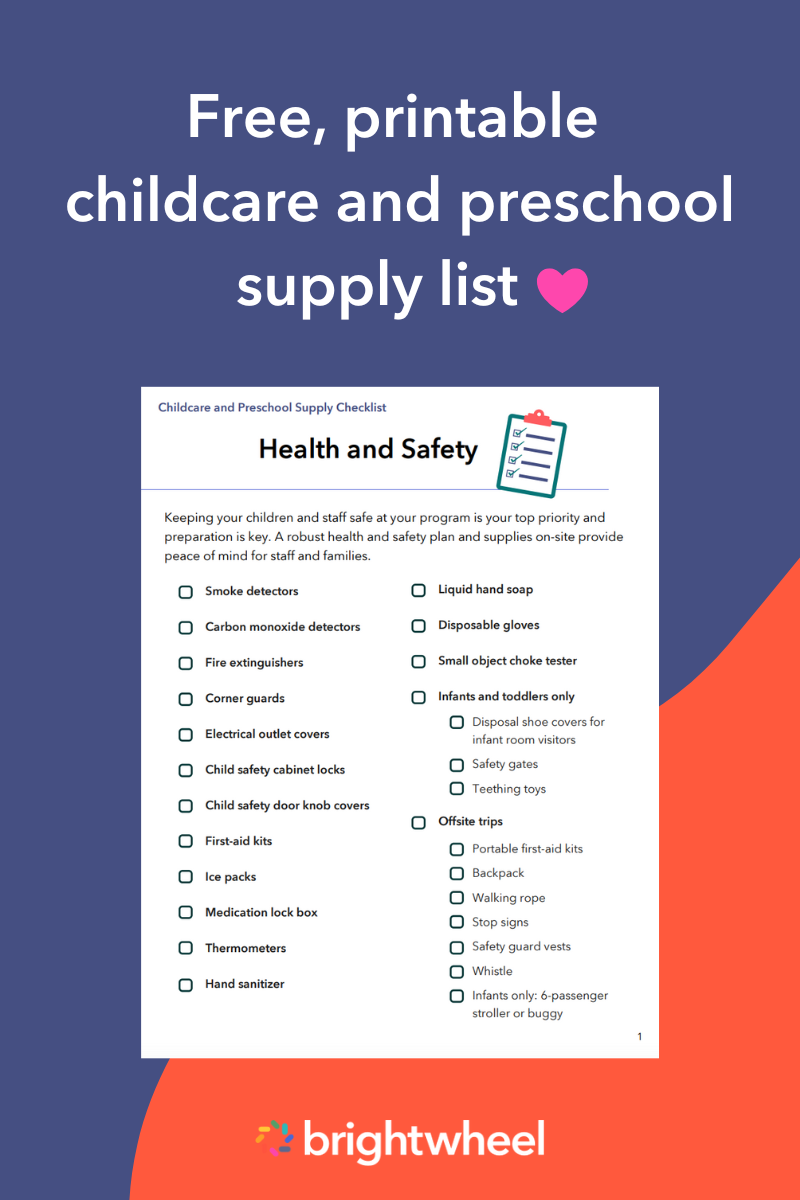
Preschool Classroom Safety Checklist
A free checklist to help you maintain a safe learning environment for the children, staff, and families at your childcare program.
Minimizing noise and environmental factors
A calm and healthy environment is crucial for children's development and well-being.
Minimize noise pollution
Excessive noise from highways, airports, or construction can be disruptive and stressful for young children, especially during nap times. Visit potential locations at different times of the day to assess noise levels. A quieter setting is always preferable for a learning environment.
Consider air quality
Poor air quality can pose health risks, particularly for young children. Avoid locations near factories, waste treatment plants, or other sources of industrial pollution. Check local air quality indexes and be mindful of any environmental concerns in the area.
Assess nearby environmental hazards
Investigate the property's history to ensure it is free from environmental hazards like lead paint or asbestos, especially in older buildings. A professional environmental assessment may be necessary to guarantee the site is safe for children.
A foundation for success
Choosing the best location for your daycare or childcare program is one of the most important decisions you will make. It requires careful research, planning, and a deep understanding of your community's needs.
By thoroughly evaluating zoning, demographics, accessibility, safety, and environmental factors, you can select a site that not only meets legal requirements but also provides a welcoming and convenient space for families. A great location sets the stage for a thriving program where children can learn, grow, and flourish.