.svg)
Every child walks into a classroom with a unique set of skills, interests, and learning styles. As an early childhood educator, you see this diversity every day. Some children might be ready to write their names, while others are still developing their fine motor skills. Differentiated instruction in preschool is a teaching approach that embraces these differences, ensuring every child can learn and grow at their own pace.
This approach isn't about creating separate lesson plans for every single child. Instead, it’s about being flexible and offering various paths to understanding and demonstrating knowledge. By tailoring your teaching methods, you can create a more inclusive and effective learning environment.
This article will explore what differentiated instruction is and provide practical strategies for implementing it in your childcare program.
Understanding the core elements
Differentiated instruction in preschool is built on the idea that teaching should be adapted to meet the needs of each learner. This can be broken down into four key elements that you can adjust: content, process, product, and the learning environment.
Content: Adapting what is taught
Content is the "what" of learning—the information, concepts, and skills you want children to grasp. Differentiating content means adjusting the material to match each child's readiness level. For example, during a lesson on letters, some children might work on recognizing the first letter of their name, while others might be ready to identify all the letters in their name or even simple sight words. You can also provide content through different formats, such as books, videos, or hands-on activities, to appeal to various learning preferences.
Process: How children make sense of the content
Process refers to the activities through which children engage with and understand the content. This is the "how" of learning. To differentiate the process, you can offer different ways for children to explore a topic. For instance, after reading a story, some children might draw a picture about their favorite part, others might act it out with puppets, and a more advanced group might try to write a sentence about it. The goal is for all children to make sense of the story, but the path they take can vary.
Product: How children demonstrate learning
Product is the way children show what they have learned. Differentiating the product gives children choices in how they demonstrate their knowledge. Instead of a single, one-size-fits-all assessment, you can offer options. After a unit on community helpers, for example, a child could build a fire station with blocks, create a collage of different helpers, or give a verbal report on what a police officer does. This flexibility allows children to showcase their strengths and gives you a more accurate picture of their understanding.
Learning environment: Creating a supportive space
The learning environment is the physical and emotional atmosphere of the classroom. A differentiated classroom should feel safe, respectful, and supportive for all children. This involves arranging the classroom to support both individual and group work, providing a variety of materials, and establishing clear routines. When children feel comfortable and supported, they are more likely to take risks, ask questions, and engage fully in learning activities.
Practical strategies for your childcare program
Bringing differentiated instruction into your preschool classroom can feel like a big task, but several practical strategies can make it manageable and effective.
- Flexible grouping: Vary how you group children for activities. Sometimes, you might use whole-group instruction for introducing a new topic. At other times, small groups based on interest or skill level can provide more targeted support. Individual work also allows children to move at their own pace.
- Learning centers: Set up distinct areas in your classroom focused on different subjects or skills, like a reading nook, a block corner, a science table, and an art easel. Stock these centers with a variety of materials at different levels of complexity. This allows children to explore topics that interest them and engage in activities that match their developmental stage.
- Tiered activities: Design activities with multiple levels of difficulty. For a single concept, you can create a few variations of the same activity. For a counting exercise, one tier might involve counting objects up to five, another up to ten, and a third could introduce simple addition. All children are working on the same skill, but at a level that is appropriately challenging for them.
- Choice boards: Give children a sense of ownership over their learning by using choice boards. A choice board is a grid of activities from which children can select a certain number of tasks to complete. This empowers them to choose activities that align with their interests and learning styles while still meeting the learning objectives you've set.
How to implement differentiated instruction
Putting these strategies into practice requires a thoughtful and ongoing process of assessment, planning, and feedback.
Assessing children's needs
To differentiate instruction effectively, you first need to understand where each child is in their learning journey. Use a combination of formal and informal assessments. Observations during free play, conversations with children, and reviewing their work can provide valuable insights into their strengths, interests, and areas for growth. This information will guide your planning and help you tailor activities to individual needs.
Planning your activities
With a clear understanding of your children's needs, you can design flexible lessons that incorporate differentiation. When planning, think about how you can vary the content, process, and product. Start small by modifying one or two activities a week. Over time, you can build a rich library of tiered activities and choice-based projects that cater to the diverse learners in your program.
Providing feedback
Feedback is essential for growth. In a differentiated classroom, feedback should be specific, encouraging, and geared toward helping each child take the next step in their learning. Rather than simply saying "good job," offer guidance that is relevant to the child's individual goals. For example, you might say, "I see you used three different colors in your drawing. Can you tell me about them?" This encourages reflection and builds confidence.
Save educators time and enhance program quality with brightwheel's Experience Curriculum. These monthly curriculum kits are mailed to your program and can be paired with easy-to-implement activities featured in the brightwheel app. This gives you tons of flexibility in your lesson planning and embedded assessments make it easy to monitor each child's growth.

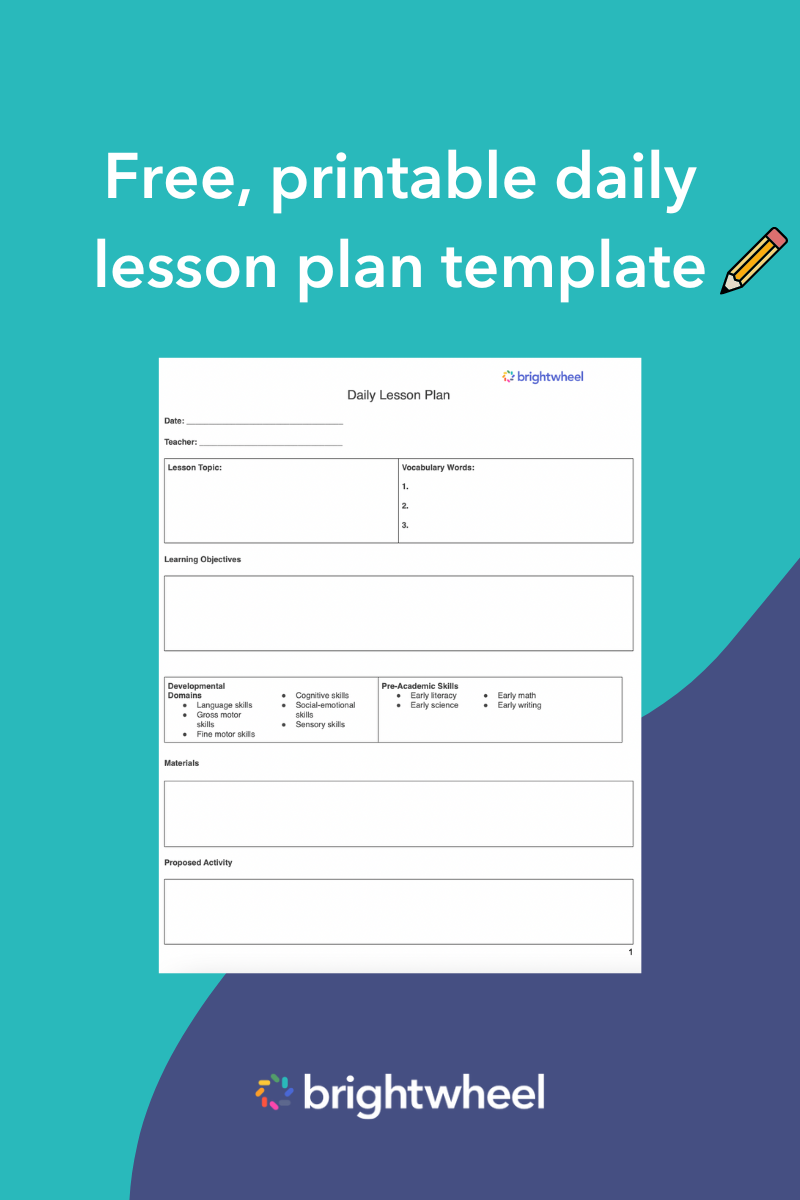
Daily Lesson Plan Template
Use this template to develop effective lesson plans for infants, toddlers, and preschoolers.
What are the benefits of differentiated instruction?
Differentiated instruction offers a wide range of benefits for children and educators alike. By tailoring teaching methods to meet the diverse needs of learners, this approach ensures that every child has the opportunity to succeed. Here’s a closer look at how differentiated instruction can make a meaningful difference.
Increased engagement and motivation
One major advantage of differentiated instruction is its ability to keep children engaged by providing tasks that are both meaningful and appropriately challenging. When students feel that the material is relevant to their interests and capabilities, they are far more likely to remain motivated. This engagement creates a positive cycle, where motivated learners actively participate and take ownership of their education, leading to deeper and more effective learning experiences.
Improved learning outcomes
Differentiated instruction allows educators to meet students where they are, adapting lessons to their individual skill levels and learning styles. This personalized approach helps children achieve their educational goals more effectively, as it reduces frustration and confusion that might arise from teaching methods that don’t suit their needs. When children are provided with the right level of challenge, they can progress at their own pace, resulting in better retention and understanding of the material.
Boost in confidence and self-esteem
Perhaps one of the most transformative benefits of differentiated instruction is its impact on a child’s confidence. By creating opportunities for every student to succeed, regardless of their starting point, this approach fosters a sense of achievement and self-worth. Children who feel capable and supported are more likely to develop a positive attitude toward learning, which can extend well beyond the classroom and into their future endeavors. A confident learner is not only more likely to take on challenges but is also better equipped to overcome obstacles.
Support for diverse learning needs
Classrooms are filled with students who have unique needs, abilities, and interests. Differentiated instruction ensures that no child is left behind by providing flexible teaching strategies that accommodate all learners. Whether a student excels in visual learning, needs hands-on activities, or thrives in collaborative environments, this approach allows educators to cater to a variety of learning preferences. This inclusivity benefits not only individual students but also creates a more cohesive and supportive classroom environment.
Enhanced educator experience
Differentiated instruction is not only beneficial for children but also for educators. By using this approach, teachers can better address the varying needs of their classrooms, leading to a more productive and rewarding teaching experience. It enables educators to be more creative, flexible, and responsive, which can ultimately reduce burnout and enhance job satisfaction. When teachers see their students succeed through tailored learning, it reinforces the value of their work.
Long-term impact on learning attitudes
A positive early learning experience can shape a child’s attitude toward education for life. Differentiated instruction lays the foundation for lifelong learning by encouraging curiosity, resilience, and a growth mindset. When students feel supported and capable, they are more likely to embrace challenges and continue learning with enthusiasm, even outside the classroom.
By adopting a differentiated approach, educators support children to reach their full potential while fostering a love of learning that can endure a lifetime. It’s a win-win strategy for building confident, engaged, and successful learners.
Nurture every child's potential
Differentiated instruction is a powerful approach for meeting the diverse needs of young learners. By thoughtfully adapting the content, process, product, and learning environment, you can create a childcare program where every child feels supported, challenged, and successful. Start by incorporating small changes, like flexible grouping or tiered activities, and watch as your children become more engaged and confident learners.