.svg)
Choosing a learning philosophy is one of the most significant decisions you will make for your childcare program. The approach you select shapes your curriculum, classroom environment, and daily interactions with children. Two of the most popular and respected methods in early childhood education are Montessori and play-based learning. While both aim to foster a lifelong love of learning, they do so in fundamentally different ways.
This article will compare the Montessori vs. play-based preschool philosophies to help you determine which approach best aligns with your program's goals and the needs of the families you serve. We will explore the core principles, classroom setups, and teaching roles of each method, offering a clear framework for making an informed decision.
The Montessori method
The Montessori method is a child-centered educational approach developed by Dr. Maria Montessori in the early 20th century. It is based on scientific observations of children's natural learning processes.
History and philosophy
Dr. Montessori, an Italian physician, believed that children are naturally eager for knowledge and capable of initiating learning in a supportive, thoughtfully prepared environment. Her philosophy emphasizes independence, freedom within limits, and respect for a child’s natural psychological, physical, and social development.
Key principles
The Montessori method is guided by several core principles:
- Child-led learning: Children choose their activities from a range of prepared options.
- Hands-on activities: Learning is experiential, using specially designed materials that engage the senses.
- Uninterrupted work periods: Children are given long blocks of time to concentrate on their chosen tasks without interruption.
- Mixed-age classrooms: Classrooms often include children of different ages, which encourages peer-to-peer learning and mentorship.
The classroom environment
A Montessori classroom is often called a "prepared environment." It is meticulously organized, clean, and inviting. Materials are arranged on low, open shelves, allowing children to access them independently. The space is structured into distinct curriculum areas, such as Practical Life, Sensorial, Language, and Mathematics. Everything in the room has a purpose and a designated place.
The role of the teacher
In a Montessori setting, the teacher acts as a guide or facilitator. Their role is to observe children, introduce them to materials, and provide support when needed. The teacher prepares the environment and steps back to allow children to explore and learn at their own pace, intervening only to guide or re-direct.
Play-based learning
Play-based learning is an educational philosophy where play is the primary vehicle for learning. It is rooted in the belief that children learn best when they are actively engaged and enjoying themselves.
History and philosophy
The philosophy of play-based learning has been influenced by many prominent theorists, including Jean Piaget and Lev Vygotsky. Piaget's work highlighted that children are active learners who construct knowledge through their experiences. Vygotsky emphasized the importance of social interaction and imaginative play in cognitive development. This approach views play not as a break from learning, but as the work of childhood itself.
Key principles
The core tenets of a play-based approach include:
- Child-initiated and teacher-supported play: While children lead the play, teachers facilitate learning by asking questions and introducing new ideas or materials.
- Focus on the whole child: The approach supports social, emotional, physical, and cognitive development.
- Learning through exploration: Children are encouraged to explore, experiment, and solve problems in a playful context.
- Emphasis on process, not product: The learning that occurs during an activity is more important than the final outcome.
The classroom environment
A play-based classroom is dynamic and flexible. It is organized into various learning centers or "interest areas," such as a block area, a dramatic play corner, an art station, and a reading nook. The environment is rich with open-ended materials that can be used in multiple ways, encouraging creativity and imagination. The space is designed to be inviting and to provoke curiosity.
The role of the teacher
In a play-based program, the teacher is an active co-participant in play. They observe children's interests and plan activities that extend their learning. The teacher might join children in building a tower, prompt a discussion during dramatic play, or introduce new vocabulary related to an ongoing activity. They are both a facilitator and a play partner.

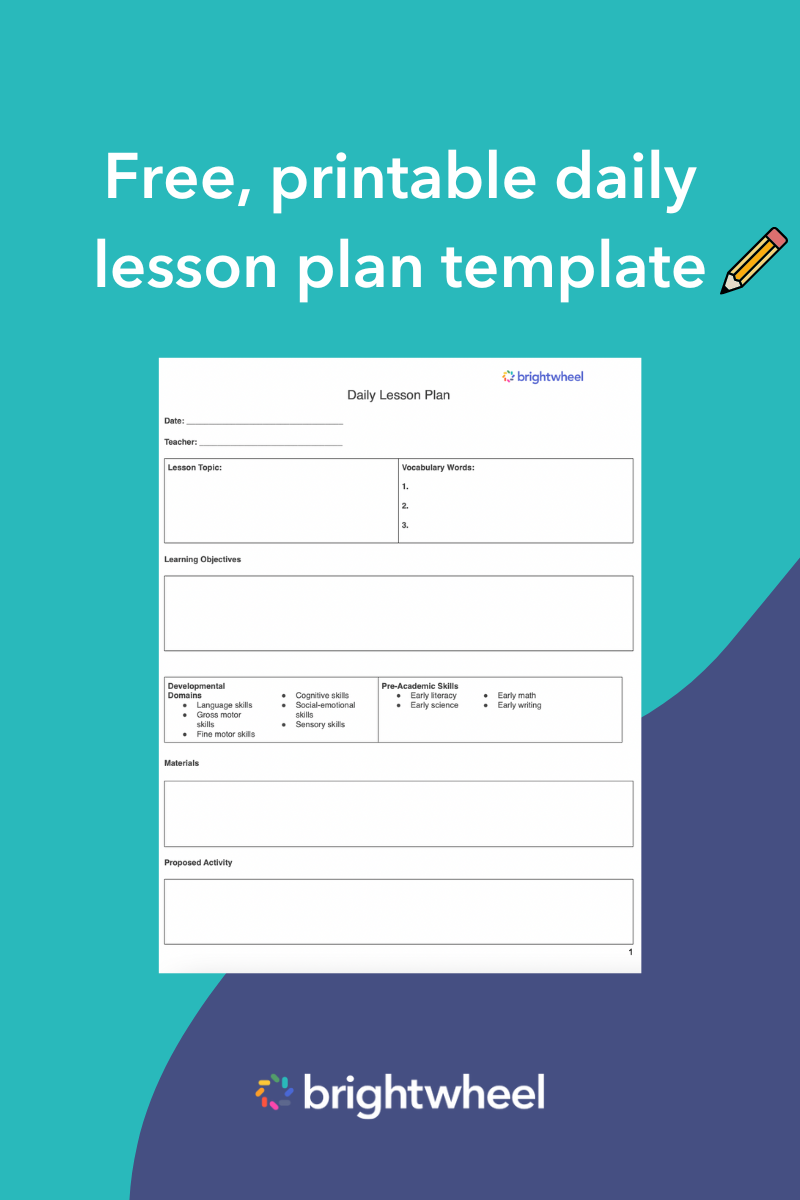
Daily Lesson Plan Template
Use this template to develop effective lesson plans for infants, toddlers, and preschoolers.
Comparing Montessori and play-based approaches
While both philosophies are child-centered, their structure and methods differ significantly. Understanding the similarities and differences can help clarify which is a better fit for your childcare program.
Similarities
- Respect for the child: Both approaches see children as capable, curious learners.
- Hands-on learning: Both philosophies emphasize learning through direct experience.
- Individualized pace: Both allow children to learn and develop at their own pace.
Differences in curriculum
The curriculum is a major point of contrast. Montessori uses a more structured, sequential curriculum with specific materials designed to teach specific concepts. A child will typically master one activity before moving on to the next.
In contrast, a play-based curriculum is emergent, meaning it evolves based on the children's interests. There are no set lessons. Instead, learning objectives are integrated into play activities. For example, a child's interest in dinosaurs could lead to activities involving counting fossils (math), reading books about dinosaurs (literacy), and creating dinosaur art (creativity).
Differences in teaching methods
Montessori teachers are guides who present materials and then observe. Their interaction is intentional and often minimal to foster independence.
Play-based teachers are active facilitators and co-creators in the learning process. They engage directly with children in their play to scaffold learning and extend their thinking.
Differences in classroom structure
Montessori classrooms are highly organized with specific rules for using materials. Freedom is given within clear limits, and there is an emphasis on order and quiet concentration.
Play-based classrooms are often more bustling and flexible. The structure is designed to encourage social interaction, collaboration, and imaginative expression.
Which approach is right for your childcare program?
The best choice between Montessori vs. play-based preschool depends on your program's vision, resources, and community.
Considerations for choosing
- Program philosophy: What are your core values regarding early childhood education? Do you prioritize independence and order, or social collaboration and creativity?
- Staff training: Montessori requires extensive, specialized training and certification. Play-based approaches also benefit from trained staff, but the requirements are generally less rigid.
- Budget: Montessori materials can be expensive, and setting up a fully equipped prepared environment requires a significant investment.
- Family expectations: Consider the preferences of the families in your community. Some may be drawn to the academic reputation of Montessori, while others may prefer the social and creative focus of a play-based approach.
Blending approaches
It is also possible to create a hybrid model that incorporates elements of both philosophies. A program might use the organized structure and some materials from Montessori while also embracing the emergent curriculum and teacher-child interaction of a play-based approach. This allows you to create a unique program that captures the best of both worlds.
Evaluating your program's goals
Ultimately, your decision should support your program's mission. Do you aim to prepare children for a traditional school setting with a strong academic foundation? Montessori might be a better fit. Is your goal to foster creativity, problem-solving, and social-emotional skills? A play-based model could be ideal.
Find the right fit for your community
Both Montessori and play-based learning offer valuable frameworks for high-quality early childhood education. By understanding their unique principles and practices, you can make a thoughtful decision that aligns with your program's identity and serves your community well.
Visit different types of programs to see these philosophies in action. Observing classrooms and speaking with educators can provide invaluable insight and help you envision the best path forward for your childcare program.