.svg)
Have you ever noticed how young children instinctively explore the world with their hands, mouths, and noses? This isn't just curiosity—it's a fundamental part of their development. For childcare providers, harnessing this natural inclination through sensory play is one of the most effective ways to support learning and growth.
This guide will walk you through everything you need to know about sensory play for toddlers and preschoolers. You'll learn what it is, why it's so important for child development, and how to easily and safely incorporate sensory activities into your childcare center's daily routine.
What is sensory play?
Sensory play is any play-based learning activity that stimulates a child’s senses: touch, taste, smell, sight, and hearing. It also includes activities that engage the vestibular sense (balance) and proprioception (body awareness). From squishing modeling clay to listening to the sounds of nature, these experiences build neural connections in the brain, laying the foundation for more complex learning.
For childcare providers, sensory play is a powerful tool. It encourages exploration and discovery, helping toddlers and preschoolers understand the world in a hands-on, engaging way.
5 science backed benefits of sensory play for child development
Integrating sensory play into your curriculum offers significant developmental advantages. These activities are more than just fun; they're essential for building critical life skills.
-
1. Cognitive development
- Sensory play helps children develop problem-solving skills and abstract thinking. When a child experiments with how water moves or what happens when they mix sand and water, they are conducting their own scientific investigations. This process builds neural pathways necessary for higher-level learning.
-
2. Fine and gross motor skills
- Sensory play activities help children develop crucial motor skills for physical strength and movement. Activities like scooping, pouring, and grasping small objects in a sensory bin help refine fine motor skills. Outdoor sensory play, such as running, jumping, and climbing, enhances gross motor skills and coordination.
-
3. Language development
Sensory play can engage multiple senses at once, providing rich opportunities for language development as it allows children to expand and explore new vocabulary words that are relevant to what they are experiencing firsthand. As children describe what they see, feel, and smell—"The sand is gritty," "The water is cold," "The playdough is squishy"—they expand their descriptive language skills.
-
4. Social and emotional growth
Social-emotional development involves regulating emotions and establishing positive relationships with peers and adults. Group sensory activities encourage sharing, turn-taking, and cooperation. It can also be a calming activity for children who feel anxious or overwhelmed, providing a healthy outlet to process their emotions.
5. Adaptability and exploration
Exposing children to a variety of textures, sounds, and smells helps them become more comfortable with new experiences. This builds resilience and encourages a curious, adventurous spirit.
6 types of sensory play
Sensory experiences can be categorized by which sense they stimulate. Incorporating a variety of these into your curriculum ensures a well-rounded developmental experience.
Tactile play (touch)
Tactile play involves exploring objects with hands. It is the most common sensory play strategy and teaches children about textures, temperature, vibrations, and pressure. Activities include playing with water, sand, slime, playdough, or textured objects.
Auditory play (hearing)
Auditory sensory play activities help children differentiate sounds and sharpen their hearing skills. In addition, auditory sensory play establishes the foundation for various tasks like multiple-step directions and distinguishing letter sounds. Examples of auditory sensory play activities involves listening to different sounds like musical instruments, nature sounds, or a "sound scavenger hunt" to identify different noises.
Visual play (sight)
Visual activities stimulate the eyes with colors, light, and moving objects. Examples include playing with light tables, color mixing activities, or shadow exploration.
Olfactory and gustatory play (smell and taste)
These types of activities are often linked. Scented playdough or a supervised "tasting tray" with different fruits can engage these senses. Always be mindful of allergies.
Vestibular play (balance)
The vestibular system is located in the inner ear and is responsible for maintaining steady balance and body movement. Activities like swinging, spinning, and balancing on beams stimulate the inner ear and help children understand their body in space. Ample time on a playground structure with swings and monkey bars support’s the vestibular system.
Proprioceptive play (body awareness)
Proprioceptive play helps children develop bodily spatial awareness and understand how their limbs relate to other body parts. This way, they can voluntarily move their arms and legs without looking at them. Pushing heavy objects (in a safe context), jumping, and stomping all provide this important sensory input.

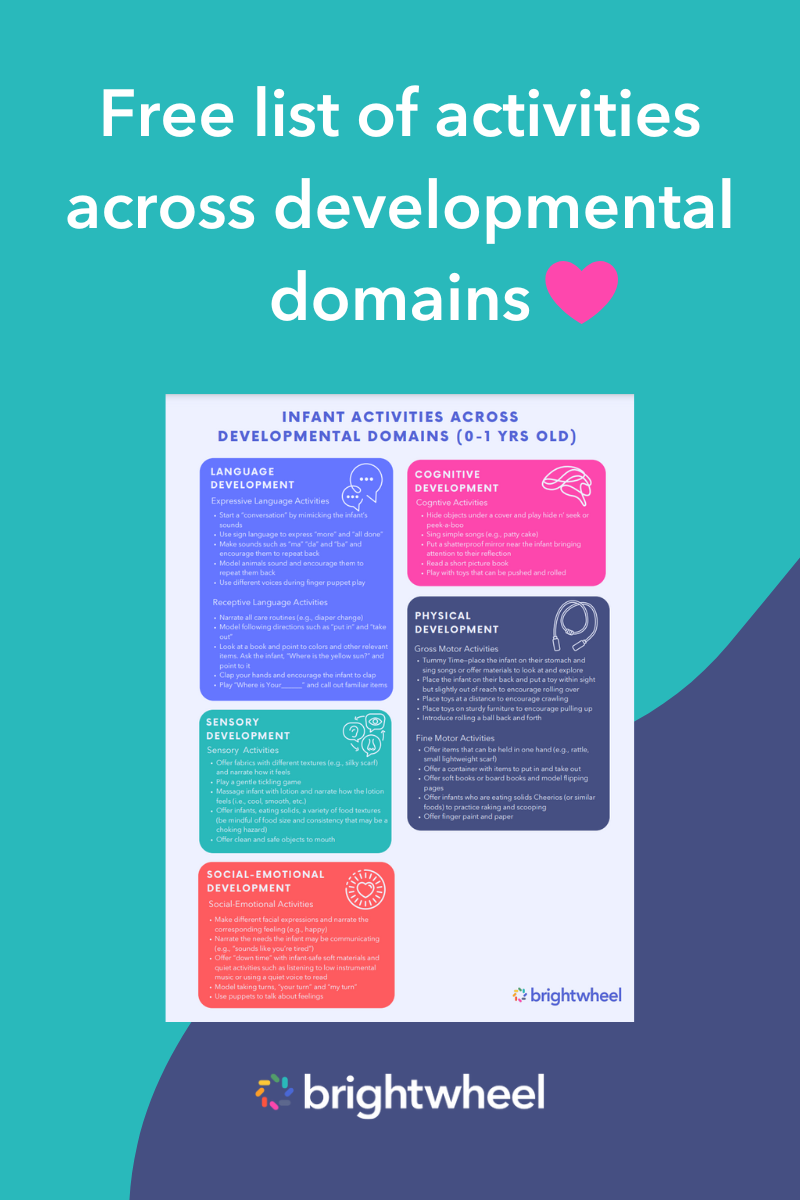
Activities Across Developmental Domains
Use this guide to craft strategies for activities that foster child development across developmental domains.
How to plan sensory play activities
There are endless opportunities when it comes to planning sensory play. Below are things to consider when designing sensory play activities.
-
1. Determine what senses you want to engage
Sensory development is 100% dependent on the primary human senses. You can plan sensory play activities primarily targeting one or two sensory experiences like finger painting (sight and touch) or multi-sensory experiences like baking bread.
It all depends on your overall goal! So, you’ll want to figure out senses to engage with specific sensory play activities.
-
2. Choose a type of sensory play activity
Preschooler and toddler sensory activities fall into four main categories:
- Messy
- Non-messy
- Edible
- Non-edible
Playing with messy sensory materials helps children develop a curious and natural sense of exploration. Finding dinosaurs in taste-safe mud, a fizzy cloud dough experiment, and balloon painting are excellent examples of messy sensory play activities.
Edible sensory play activities promote a multi-sensory experience. Some examples include making granola or rice Krispies treats, or trying marshmallows. Non-edible sensory play activity examples include play dough, paper pulp, and clean mud.
-
3. Consider your environment
Some sensory play activities are best done indoors, while others are better suited to an outdoor environment. Depending on your specific sensory play activity and goal, you can opt for an indoor or outdoor setting. For example, light and shadow exploration is best done in a dark indoor environment.
Also, gross motor skills are best done outside, with ample room for big body movement. More importantly, there are logistical implications to consider. For example, some activities may need access to water or a sink. So, you’ll want to think about these logistics before choosing a setting.
-
4. Promote social-emotional skills
Having children work in small groups during sensory play is a great way to support their social-emotional skills. A simple activity like making play dough encourages turn-taking while adding ingredients, stirring, and kneading the dough.
25+ easy sensory play ideas for your classroom
Here are some easy sensory play activities for daycare and preschool settings, organized by setup time and type.
Quick setup activities (5 minutes or less)
- Mystery bag: Place a familiar object in a bag and have children guess what it is by touch.
- Textured balloon fun: Fill balloons with different materials like rice, flour, or water.
- Scented jars: Put cotton balls with different scents (like vanilla or lemon) in small jars for children to smell.
- Ice cube exploration: Let toddlers feel and play with ice cubes in a bin.
- Ribbon dancing: Play music and let children dance with colorful ribbons.
- Sensory bin: To create a sensory bin, fill a shallow container with a base material (like water, sand, or dry pasta) and add tools like scoops, cups, and funnels. Rotate the materials regularly to keep children engaged. You can create themed bins, such as an ocean bin with water and sea creatures or a construction bin with sand and toy trucks.
Messy play activities
- Shaving cream art: Spread shaving cream on a tray and let kids draw in it with their fingers.
- Oobleck (cornstarch and water): Mix cornstarch and water to create a non-Newtonian fluid that’s both solid and liquid.
- Mud kitchen: Provide pots, pans, and utensils for children to make "recipes" with dirt and water.
- Edible slime: Use a food-safe recipe so you don't have to worry if a child takes a taste.
- Finger painting: A classic messy activity that lets children explore colors and textures.
Outdoor sensory experiences
- Nature scavenger hunt: Create a list of items for children to find, such as a smooth stone, a rough piece of bark, and a colorful leaf.
- Sound walk: Walk quietly and have children identify the different sounds they hear.
- Barefoot walk: Create a path with different safe textures like grass, sand, and smooth stones.
- Puddle jumping: After a rain, put on boots and let kids splash in puddles.
- Cloud gazing: Lie on the grass and watch the clouds, describing the shapes you see.
Quiet sensory activities
- Sensory bottles: To make a sensory bottle, fill clear plastic bottles with water, glitter, and small objects for a calming visual experience.
- Playdough sculpting: The resistance of playdough is great for calming anxious energy.
- Listening to calming music: Play classical music or nature sounds during quiet time.
- Fidget toys: Provide a basket of safe fidget toys for individual use.
- Looking at picture books: Choose books with high-contrast images or textured pages.
Group vs. individual activities
- Group: Building a large fort with blankets, parachute games, or a group mural.
- Individual: Personal sensory bins, looking through a kaleidoscope, or using a light table.
Safety guidelines for sensory play activities
Safety is the top priority. Follow these guidelines to ensure your sensory activities are safe and inclusive for every child.
- Age-appropriate materials: Ensure all materials are non-toxic and do not pose a choking hazard, especially for toddlers who tend to put objects in their mouths. For children under three, avoid small parts.
- Allergy considerations: Be aware of all food and skin allergies. Avoid common allergens like peanuts, dairy, and wheat in edible sensory play unless you are certain it is safe for every child. Clearly label all materials.
- Constant supervision: Always supervise sensory play, especially activities involving water, small parts, or messy materials. This allows you to facilitate learning and intervene if a safety issue arises.
- Clear clean-up protocols: Establish a routine for cleanup. Teach children to help put materials away. Disinfect bins and tools regularly to prevent the spread of germs, and have clear procedures for spills and messes.
Enhance learning with sensory play
By thoughtfully incorporating sensory play into your daily routine, you provide children with rich learning experiences that support their overall development. These activities don't just keep toddlers and preschoolers engaged; they build the cognitive, physical, and emotional skills they need to thrive. Start with a few simple ideas and watch as your students explore, discover, and learn through the power of their senses.