.svg)
A parent teacher conference is one of the most meaningful touchpoints you’ll have with families in your childcare program. Whether you run a daycare, preschool, or early learning center, these conversations help you build trust, share developmental insights, and align on goals for each child.
But, conferences can also feel rushed or intimidating if you don’t have a clear plan.
This guide will walk you through how to confidently lead family conferences that feel warm, collaborative, and productive — even when time is limited.
You’ll learn:
-
What to include in a childcare-focused parent teacher conference
-
How to prepare developmental observations and examples
-
Conversation tips to make families feel seen and supported
-
Sample agendas, questions, and follow-up strategies

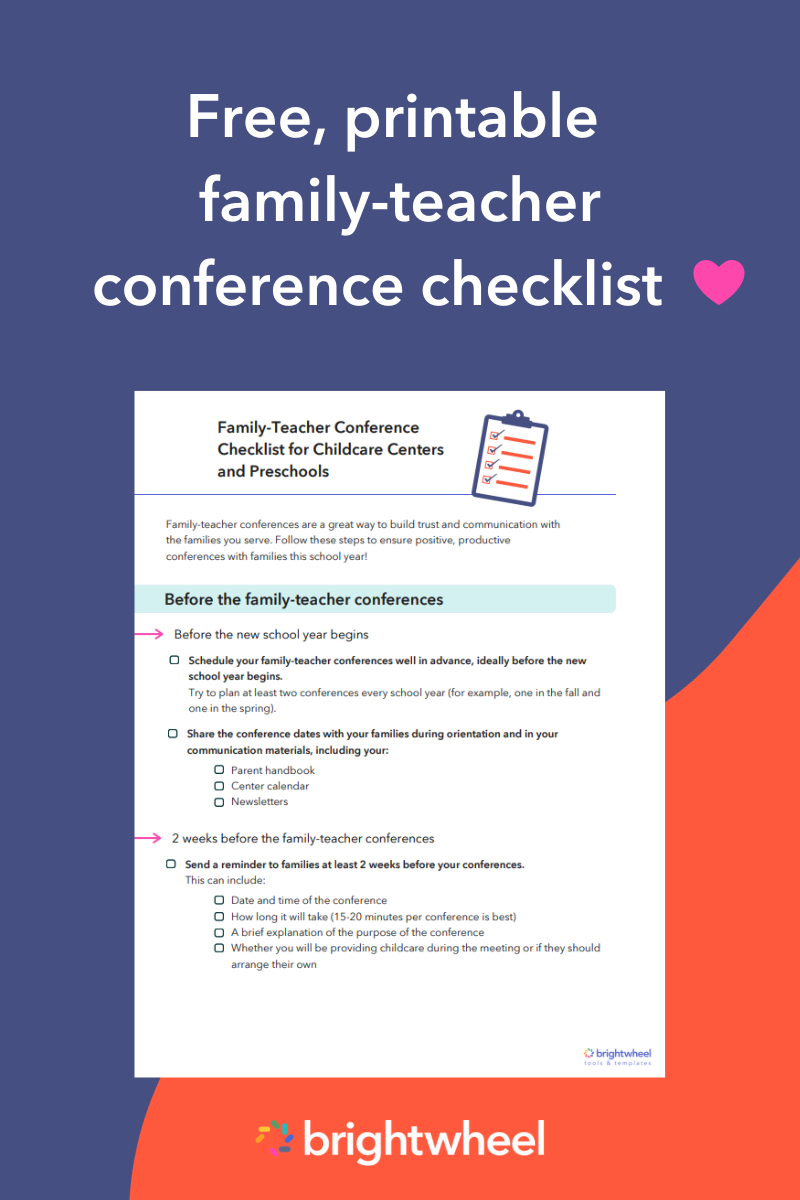
Family-Teacher Conference Checklist
A free checklist for planning productive parent-teacher conferences.
What is a parent-teacher conference in child care?
In early education settings, a parent teacher conference is a scheduled check-in between teachers and a child’s family to share:
-
Developmental progress
-
Social-emotional growth
-
Classroom behavior and interests
-
Goals or learning plans
Unlike traditional K–12 conferences, childcare conversations often lean more into daily routines, emotional regulation, emerging skills, and behavior patterns rather than formal academics.
Conferences are a great opportunity to build strong partnerships between families and educators. This dedicated meeting time creates an important space for open communication between teachers and families, celebrating each child’s progress and aligning on specific goals to support their continued growth. They also provide a valuable connection with families, increasing their engagement in their child’s learning.

Benefits of a parent-teacher conference
You can’t underestimate the benefits of planning or attending a parent-teacher conference. Parent-teacher conferences facilitate smooth teaching and learning and uphold positive relations between teachers, families, and children. Below, we elaborate on why parent-teacher conferences are worth it:
Builds positive relationships between teachers and families
Parents and guardians are a child's first and most important teachers. Their primary role is to prepare their child for school and life and establish the right foundation for teachers to build on. Parent-teacher conferences are an opportunity to come together for the child’s benefit.
Aligns home and classroom approaches
Children thrive when caregivers and families respond consistently. Conferences allow you to:
-
Share strategies that work well in the classroom (“We’ve found giving him choices helps with transitions”)
-
Ask what works at home to mirror it at school
-
Coordinate supports for things like potty training, emotional regulation, or speech development
This alignment reduces frustration for the child and creates a stronger support network across both environments.
Reveals insights that aren't visible in one setting
Children often show different behaviors at school vs. home. For example, a child who talks nonstop at home may be quietly observing at school.
Conferences help fill those gaps, giving both teachers and families a more complete picture of the child’s personality and needs.
Encourages early intervention
Early childhood is a key window for identifying delays or concerns — but bringing these up without care can be difficult.
Conferences offer a respectful space to:
-
Share patterns you’ve noticed
-
Compare observations with parents
-
Recommend next steps or evaluations when needed
When handled gently, early intervention conversations can be life-changing — and parents are often grateful when approached with empathy and clarity.
Reinforces your value as a professional educator
Conferences aren’t just about reporting; they showcase your expertise. When you confidently share developmental insights, suggest strategies, and speak about a child’s growth, families see you as a true partner in raising their child — not just a caregiver.
A parent teacher conference in early childhood is much more than a progress report — it’s relationship-building, advocacy, and joint celebration all in one.
When to hold conferences in childcare programs
Most early childhood programs schedule formal parent-teacher conferences twice per year, typically in fall and spring. This timing allows teachers to share initial observations and goals during the first conference, then review progress and plan for transitions during the spring meeting.
Fall conferences usually occur 6-8 weeks into the school year, giving teachers sufficient time to observe children in various settings and activities. Spring conferences often happen 2-3 months before the school year ends, allowing time to implement any recommended strategies or prepare for upcoming transitions.
Some programs also offer mid-year check-ins for children who may need additional support or have experienced significant changes. These shorter meetings help maintain momentum between formal conferences and address emerging concerns promptly.
Virtual parent-teacher conferences have become increasingly popular, offering flexibility for busy families while maintaining the personal connection essential for meaningful dialogue. Many programs now offer both in-person and virtual options to accommodate different family preferences and schedules.
How to prepare for a parent-teacher conference
A great conference starts long before the actual conversation. When you take time to prepare thoughtfully — both behind the scenes and with families — you can ensure the meeting feels calm, collaborative, and productive.
Here’s a step-by-step roadmap for childcare providers:
Step 1: Schedule conferences early and send invites in advance
Here is a suggested communication timeline to ensure strong attendance and reduce stress for families:
|
Timing |
Action |
| 3-4 weeks before | Send the initial conference invitation with available dates/times. Offer multiple time slots or online booking if possible. |
| 1 week before | Send a friendly reminder along with any pre-conference questions or a family input form. |
| 1-2 days before | Send a quick confirmation message or automated reminder (“Looking forward to seeing you Thursday at 4 PM!”) |
Make sure your invites include important details like:
- How long the conference will take
- Where to meet (in-person or virtual)
- Whether children can attend or not
Brightwheel’s Sign-Up feature makes scheduling parent-teacher conferences simple by allowing families to RSVP for available time slots from any device. Automated reminders ensure families don’t miss their scheduled meetings, helping to boost attendance and streamline communication.
Step 2: Review observations and developmental notes
Start by collecting work samples, photographs, and developmental assessments that demonstrate the child's progress across different areas. Organize these materials chronologically or by developmental domain to create clear narratives about growth and learning. Include examples that show both strengths and areas where the child is working to develop new skills.
Step 3: Choose strengths to celebrate first
Always open with what the child is doing well. It sets a positive tone and builds trust.
Think about:
-
Their unique personality traits: “She’s such a helper!”
-
Their favorite activities: “He lights up during pretend play.”
-
Recent moments of growth: “She’s been trying new foods at lunch!”
Write down at least 3 strengths you want to highlight.
Step 4: Identify one or two growth areas (if needed)
If there are challenges — like separation anxiety, biting, speech delays, or potty regression — prepare to discuss them factually and gently.
- Focus on observations, not judgments and use neutral language: "We’ve noticed he hits when frustrated. We’re working on offering words instead."
-
Bring possible strategies or next steps, not just problems
-
Be ready to ask parents what works at home
If a child is exhibiting challenging behavior or not meeting developmental milestones, it’s a good idea to inform families right away rather than waiting for parent-teacher conference time to roll around. Generally, any difficult conversations about sensitive or urgent issues should have their own separate meetings with families. This ensures that any concerns can be addressed immediately and families are not taken by surprise during a parent-teacher conference.
Step 5: Send a quick pre-conference questionnaire
This helps you understand their priorities before the meeting.
Example questions:
-
“Is there anything you’d like to make sure we discuss?”
-
“Do you have any goals for your child this season?”
-
“Have there been any routine or behavior changes at home?”
Parents feel more engaged when they know it’s a two-way conversation, not just a report.
Step 6: Prepare the environment and materials
-
Choose a quiet, private spot (even a cozy corner works)
-
Print or gather child portfolios, artwork, checklists, or photos
-
Prepare a notepad for parents to take home or a copy of goals/next steps
How to structure a parent-teacher conference (sample agenda)
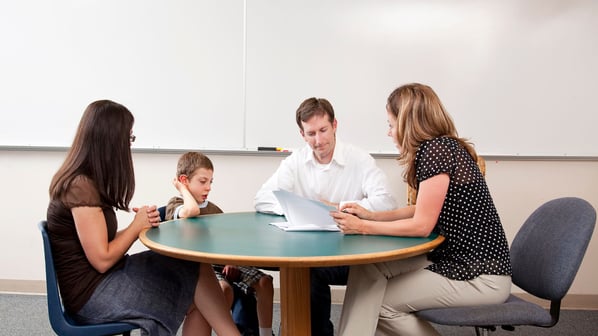
Below is a sample parent-teacher conference agenda:
-
Warm greeting: Start with appreciation and positive stories
-
Share overall observations and progress
-
Highlight developmental strengths
-
Discuss growth areas or challenges gently and constructively
-
Invite parent input
-
Set shared goals or strategies
-
Summarize and thank them
Handling difficult conversations
Having difficult conversations with parents is an uncomfortable but inevitable part of being an early childhood educator. It’s important to remember that the relationships you build with parents are based on effective communication, trust, and collaboration. These are the foundations you’ll use to navigate through difficult conversations.
Typically, sensitive or urgent issues should have their own in-person meeting outside of a parent-teacher conference. However, difficult topics may arise during conferences which can lead to heightened emotions. In these tense situations, respond in a calm and direct way. Keep the conversation focused on the issue and finding a resolution. If necessary, allow everyone to take a short break.
Ask for the parent’s perspective to gain a deeper understanding of the issue and repeat back their main points so they know they are being heard. It’s essential to remind everyone that you’re one team working together to provide the child with the best tools for success.
Work together to develop realistic goals and strategies that both home and school can implement consistently. Ensure that any recommendations are practical and achievable given the family's circumstances and resources.
Sample questions to ask during a parent-teacher conference
Questions teachers can ask parents to build connection
-
What does your child enjoy most/least about school right now?
-
How does your child react to challenges at home?
-
Are there routines or strategies that work well for your family?
-
Is there anything happening at home that might affect learning or behavior?
- What skills would you love to see your child grow in this year?
Questions parents may ask teachers
-
Does my child play with others?
-
What skills should we focus on building at home?
- Is my child meeting age expectations?
-
What resources or activities do you recommend?
-
How will we track progress moving forward?
After the conference: How to follow up
A parent-teacher conference is not the end, but the start of ongoing collaboration. Effective follow-up ensures that agreements lead to meaningful action and continued progress.
To maintain this partnership and ensure shared success:
- Send a summary: Within 24-48 hours after each conference, send families a discussion summary. Highlight key points, agreed-upon goals, and specific action steps. This written record prevents misunderstandings and provides a clear reference.
- Schedule regular check-ins: Plan brief conversations to discuss goal progress. These can be email updates, phone calls, or informal chats during pickup, based on family preference.
- Document observations: Record any changes in the child's behavior, learning, or development after the conference. This data informs future discussions and demonstrates strategy effectiveness.
- Share classroom information: Keep families informed about classroom activities, upcoming events, and ways to support learning at home. Regular communication strengthens the partnership and aligns everyone towards common goals.
Frequently asked questions about parent-teacher conferences
How long should each parent-teacher conference last?
Most parent-teacher conferences in early childhood settings run 20-30 minutes. This timeframe allows for meaningful discussion while respecting busy family schedules. Some conferences may require additional time for complex topics or multiple children.
What if parents disagree with my observations?
Listen carefully to parents' perspectives and ask questions to understand their concerns. Share specific examples of your observations and explain the context in which you noticed certain behaviors. Remember that children may behave differently at home and school.
How can I make conferences productive for families who speak different languages?
Arrange for interpreters when needed and provide translated materials when possible. Use visual aids, work samples, and demonstrations to communicate beyond language barriers. Consider cultural differences in communication styles and educational expectations.
Should children attend their parent-teacher conferences?
This depends on the child's age, maturity level, and the topics being discussed. Some programs include children for portions of the conference to celebrate their work and involve them in goal-setting. Others keep conferences adult-only to allow for open discussion of concerns.
How do I handle parents who seem disengaged during conferences?
Try different communication approaches such as asking specific questions about their child's interests or sharing particularly positive observations. Some parents may feel overwhelmed or uncertain about how to participate in educational discussions.
Final thoughts
Conducting a successful parent-teacher conference requires careful planning and teamwork from both teachers and families. With a clear agenda and welcoming environment, parent-teacher conference time provides an opportunity for teachers and families to learn more about each child’s individual progress and work together on shared goals.
When done right, parent-teacher conferences can build positive relationships between teachers and families, align expectations, and improve learning outcomes.