.svg)
As adults, we tie our shoes or write a grocery list without a second thought. But for preschoolers, these actions require a crucial developmental skill: crossing the midline. This ability for the left and right sides of the body to work together is fundamental for everything from crawling to handwriting.
This article will explain what crossing the midline is, why it's a critical milestone, and provide you with simple, effective crossing the midline activities to support the children in your care.
Table of contents:
What is crossing the midline?
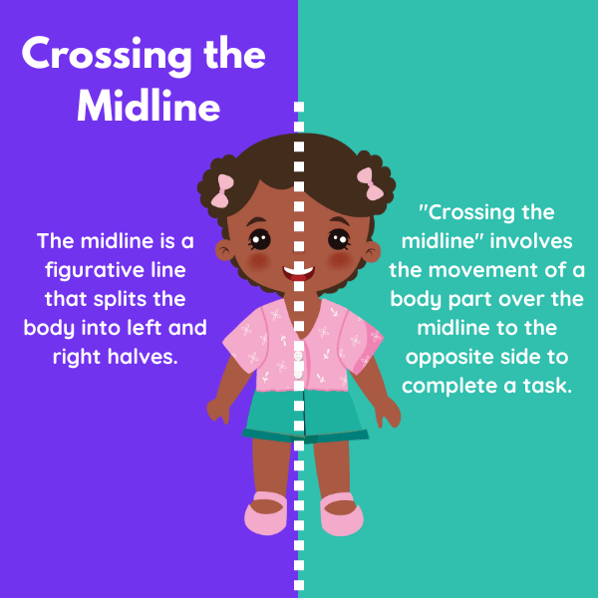
Crossing the midline is the ability to move a hand or foot across the center of the body to work on the opposite side. This imaginary line runs from the top of the head down to the feet, dividing the body into left and right halves.
When a child crosses this line—for instance, by using their right hand to pick up a block on their left side—it shows that the left and right hemispheres of their brain are communicating effectively. This brain communication is essential for developing coordinated movements and performing complex tasks.
Children will continue regularly crossing the midline as they reach new milestones, such as crawling, scooting, rolling over, reaching for and playing with toys, and eventually self-feeding. These physical developmental milestones are vital to tracking a child's growth and development.
Why is crossing the midline important for development?
Crossing the midline is a foundational skill that supports many aspects of a child's development. When children practice these movements, they are building neural pathways that are critical for physical and cognitive skills.
Key developmental benefits include:
- Improved gross motor skills: Activities like running, skipping, and climbing all require the body's two sides to work together in a coordinated way.
- Enhanced fine motor skills: Tasks like using scissors, buttoning a coat, and holding a crayon to write all rely on the ability to cross the midline.
- Reading and writing readiness: When reading, a child's eyes must track words from left to right across a page. For writing, their dominant hand needs to move smoothly across the page. Both actions depend on a well-developed ability to cross the midline.
- Body awareness: These activities help children understand where their body is in space and how their limbs can work together, which is crucial for balance and coordination.
Signs a child may struggle with crossing the midline
Children develop at their own pace, but some may show signs of difficulty with this particular skill. By observing children during play and daily routines, you can identify if they need extra support.
Common signs of difficulty include:
- Switching an object from one hand to the other at the center of their body instead of reaching across.
- Turning their entire torso to reach for an item on their opposite side.
- Using their left hand for tasks on the left side and their right hand for tasks on the right.
- Difficulty with activities that require both hands, like catching a large ball.
- Trouble with writing or drawing continuous lines across a page.
If you notice these behaviors, incorporating targeted, playful activities can make a significant difference.
20+ fun crossing the midline activities
The best way to encourage development is through play. Here are over 20 fun and easy crossing the midline activities you can integrate into your childcare program’s daily lesson plans:
Gross motor activities
- Play catch or kickball: Tossing a ball back and forth or playing kickball encourages children to use both hands and feet, making it a great crossing the midline activity.
- Animal walks: Have children imitate animals like bears (walking on hands and feet) or crabs (walking sideways).
- Bubble popping: Blow bubbles and encourage children to pop them with one hand, reaching across their body.
- Yoga poses: Poses like Eagle Pose or twisting poses naturally encourage crossing the midline.
- Climbing: Playground equipment like ladders and jungle gyms are excellent for bilateral coordination.
- Obstacle courses: Set up a simple course where children need to crawl under tables, step over pillows, and weave around chairs.
- Marching: Encourage high knees and swinging arms, touching the opposite knee with each hand.
- Parachute play: Encourage children to hold the edges of a parachute, lift and lower it to create waves, or bounce lightweight balls in the center, promoting teamwork and coordination.
Musical and rhythm activities
- Clapping games: Classic games like "Miss Mary Mack" or "Pat-a-Cake" are perfect for midline crossing, rhythm, and hand-eye coordination.
- The Hokey Pokey: This song is designed to get children moving different body parts across their center.
- Drumming: Set up buckets or boxes as drums and have children use drumsticks (or their hands) to tap drums placed on their opposite sides.
- Scarf songs: Use scarves to draw shapes in the air while singing songs like "Wheels on the Bus."
- Ribbon dancing: Give children long ribbons or scarves to wave in big loops and figure eights in the air.
Classroom and art activities
- Drawing large shapes: Have children draw large figure eights, rainbows, or circles on a whiteboard, an easel, or a large piece of paper on the floor.
- Sorting objects: Set up a simple sorting station. Have children sit and sort colored blocks or pom-poms into containers placed on their opposite sides.
- Sticker lines: Place a line of stickers on a piece of paper and have the child connect them with a crayon, or peel stickers from a sheet on their left side to place on a paper on their right.
- Washing windows or tables: Give children a sponge or cloth and have them wipe a large surface using big, circular motions.
- Building with blocks: Encourage children to reach across their body to grab blocks for their tower.
- Passing objects in a circle: Have children sit in a circle and pass a beanbag or ball around, requiring them to reach to their side to pass and receive the object.
- Playing with cars: Create a large "road" on the floor in a figure-eight pattern for children to drive their toy cars on.
- Play dough fun: Rolling play dough into long "snakes" with both hands or using cookie cutters across a large flattened piece encourages midline crossing.

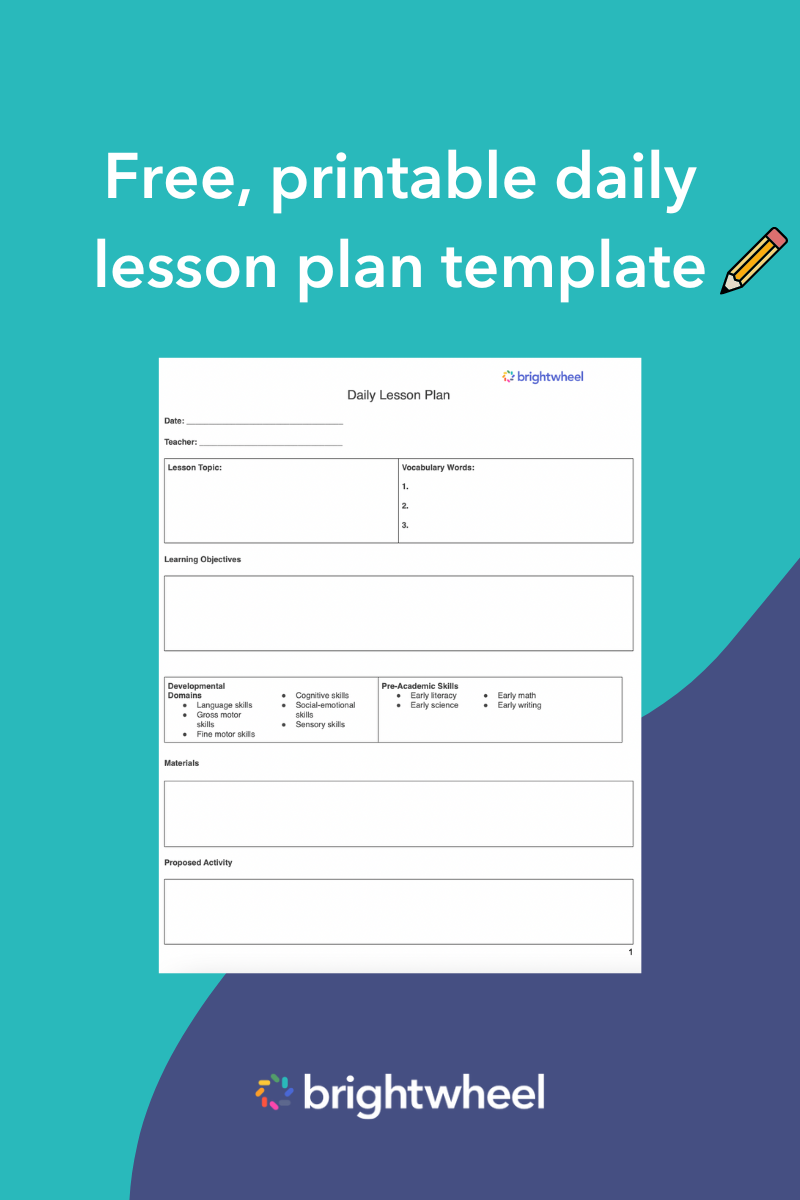
With a tool like brightwheel's lesson plan feature, you can create custom childcare lesson plans that meet the needs of your children and program. Additionally, you can log your observations to track how children are performing against the milestones related to their age group.
Support every child’s development
Incorporating crossing the midline activities into your daily routines is a simple way to have a big impact on a child's development. By being observant and providing opportunities for practice through play, you help set children up for success in writing, reading, and physical coordination.
FAQ about crossing the midline
At what age should a child be able to cross the midline?
Babies can start showing signs of crossing the midline as early as 4-6 months when reaching for toys. The skill becomes more consistent as they learn to crawl and should be well-established by the time they are preschool age (3-4 years old).
What is an example of a crossing the midline activity?
A simple example is having a child draw a large figure-eight on a whiteboard or piece of paper. This movement naturally forces their arm to cross from one side of their body to the other, strengthening the neural pathways required for this skill.
How do you know if a child is struggling with crossing the midline?
You might notice a child switching an object from one hand to the other at their body's center instead of reaching across, or they may turn their whole torso to reach for something on their opposite side. Difficulty with tasks like writing across a page can also be a sign.