.svg)
Children who develop strong listening skills show significant growth in social and academic areas. This article offers educators and caregivers practical strategies to improve active listening in kids of all ages.
From age-appropriate activities to tips for overcoming common challenges, discover how to create engaging experiences that enhance communication and strengthen relationships.
What is active listening for kids?
Active listening for kids involves giving speakers complete attention while demonstrating understanding through verbal and nonverbal responses. Unlike passive listening, where children simply hear words without processing meaning, active listening requires full engagement with the speaker's message.
Key components of active listening include maintaining eye contact, asking clarifying questions, providing feedback, and showing genuine interest in what others are saying. When children practice active listening, they learn to focus their attention, process information more effectively, and respond thoughtfully rather than reactively.
This foundational skill differs significantly from basic hearing. While hearing occurs naturally when sound waves reach the ears, active listening requires conscious effort and practice. Children must learn to filter distractions, interpret tone and emotion, and connect new information with existing knowledge.
Why active listening skills matter for children's development
Active listening serves as a cornerstone for multiple areas of child development. Children who develop strong listening skills early demonstrate improved academic performance, stronger peer relationships, and enhanced emotional intelligence.
-
Academic benefits: Students with well-developed listening abilities show increased reading comprehension, better following of multi-step instructions, and improved retention of classroom material. They're more likely to participate meaningfully in group discussions and demonstrate superior problem-solving capabilities.
- Social and emotional growth: Active listening helps children build empathy by understanding others' perspectives and emotions. This skill supports conflict resolution, strengthens friendships, and creates a foundation for emotional regulation. Children learn to recognize emotional cues in speech patterns and respond appropriately to different social situations.
-
Communication development: Strong listening skills directly impact speaking abilities. Children who listen actively develop larger vocabularies, improved grammar usage, and better storytelling capabilities. They learn communication patterns and social conventions through careful attention to how others speak.
- Long-term success indicators: Research shows that children with strong listening skills demonstrate better leadership qualities, increased self-confidence, and improved collaborative abilities throughout their educational journey and into adulthood.
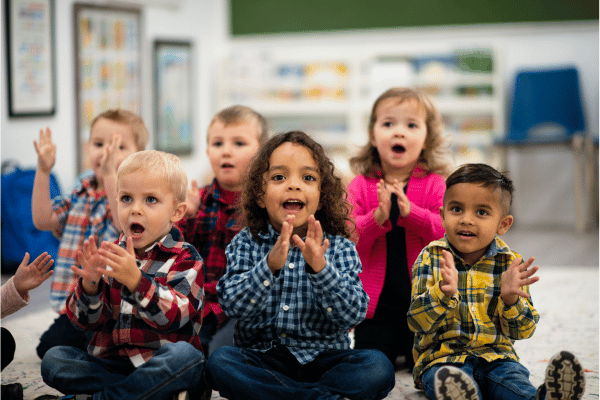
10 proven active listening activities for children
1. Echo response game (ages 2-4)
Materials: None required
Instructions: Speak a simple phrase or sentence, then have children repeat it back exactly as they heard it. Start with single words and gradually increase complexity.
Troubleshooting: If children struggle, slow down your speech and use more animated expressions to maintain their attention.
2. Story sequencing cards (ages 3-6)
Materials: Picture cards showing story sequences
Instructions: Tell a simple story using the cards, then mix them up and ask children to arrange them in the correct order based on what they heard.
Troubleshooting: Begin with 3-card sequences for younger children, expanding to 6-8 cards as skills develop.
3. Musical statues with instructions (ages 3-7)
Materials: Music player, space for movement
Instructions: Play music while children dance, then pause and give specific instructions like "freeze like a tree" or "sit down quietly."
Troubleshooting: Use visual demonstrations alongside verbal instructions for children who need additional support.
4. Detailed drawing directions (ages 4-8)
Materials: Paper, crayons or markers
Instructions: Give step-by-step drawing instructions without showing the final result. Children must listen carefully to create the correct image.
Troubleshooting: Provide encouraging feedback and allow children to ask clarifying questions.
5. Multi-step treasure hunt (ages 5-9)
Materials: Hidden objects, instruction cards
Instructions: Give verbal directions for finding hidden treasures using multiple steps that build upon each other.
Troubleshooting: Start with 2-step instructions and gradually increase complexity based on success rates.
6. Emotion detective game (ages 4-8)
Materials: None required
Instructions: Tell stories with varying emotional tones and ask children to identify how characters feel based on vocal cues.
Troubleshooting: Model different emotions clearly and discuss facial expressions alongside vocal tones.
7. Partner interview activity (ages 6-10)
Materials: Question prompts, paper for notes
Instructions: Children interview each other using prepared questions, then share what they learned with the group.
Troubleshooting: Provide question examples and teach basic interviewing skills before beginning.
8. Sound pattern recognition (ages 3-7)
Materials: Various noise-making objects
Instructions: Create patterns of sounds (clap, bell, whistle) and have children identify and repeat the patterns.
Troubleshooting: Use visual cues alongside auditory patterns for children with processing difficulties.
9. Collaborative story building (ages 5-10)
Materials: Story starter prompts
Instructions: One child begins a story, others add sentences by listening carefully and building on previous contributions.
Troubleshooting: Provide sentence starters and encourage children to reference previous story elements.
10. Direction following obstacle course (ages 4-9)
Materials: Cones, ropes, or furniture for obstacles
Instructions: Create a course where children must listen to verbal directions to navigate successfully.
Troubleshooting: Practice individual movements before combining them into sequences.
How to teach active listening for kids by age group
Toddlers (ages 2-3): Building foundation skills
Key activities: Simple echo games, picture book discussions, singing repetitive songs
Measurable outcomes: Child can follow one-step instructions, maintains eye contact for 10-15 seconds, responds to their name consistently
Focus on very short activities lasting 2-5 minutes. Use exaggerated expressions and gestures to maintain attention. Celebrate small victories like turning toward your voice or stopping an activity when called.
Preschoolers (ages 4-5): Expanding comprehension
Key activities: Interactive storytelling, role-playing games, group singing activities
Measurable outcomes: Follows two-step instructions reliably, asks questions about stories, participates in group conversations
Introduce activities requiring 5-10 minutes of sustained attention. Begin teaching children to ask clarifying questions and express when they don't understand instructions.
School-age (ages 6-8): Developing complex skills
Key activities: Multi-step instruction following, peer interviews, collaborative projects
Measurable outcomes: Completes 3-4 step tasks independently, summarizes information accurately, demonstrates empathy in conversations
Extend activities to 15-20 minutes and introduce peer-to-peer listening exercises. Focus on teaching children to listen for main ideas and supporting details.
Common challenges teaching active listening to children
Attention difficulties: Some children struggle with sustained attention due to developmental differences or environmental factors. Address this by breaking activities into shorter segments, providing movement breaks, and using multi-sensory approaches that engage visual, auditory, and kinesthetic learners.
Processing speed variations: Children process information at different rates. Allow extra time for responses, repeat important information using different words, and provide visual supports alongside verbal instructions.
Environmental distractions: Classroom or home environments may contain competing sounds and visual stimuli. Create designated quiet spaces for listening activities, minimize background noise, and teach children strategies for focusing their attention.
Motivation and interest levels: Children engage more readily with topics that interest them. Incorporate their preferences into listening activities, use games and interactive elements, and connect listening skills to activities they enjoy.
Language development variations: Children at different language development stages require modified approaches. Use simpler vocabulary with beginning speakers, provide visual supports, and celebrate progress at each child's individual pace.
Types of listening
In addition to active listening, other types of listening are critical to a child's development.
- Critical listening occurs when children listen to understand what's being said and evaluate the information to draw a conclusion or make a decision. An example of critical listening is children listening to the teacher read The Tortoise and the Hare to the class and discussing the story's moral afterward.
- Discriminative listening is used when children are developing phonemic awareness. During this type of listening, children pay attention to rhyming sounds and the sounds different letters and letter groups make within words. This type of listening is foundational to eventually understanding the intention of what's being said based on verbal cues and changes in tone and pitch. An example of this type of listening is reading books or poems to children and asking them to identify which words rhyme.
- Aesthetic listening is used when children listen to music, videos, stories, or plays strictly for pleasure. While they may learn new things from the material, the activity is only for enjoyment and imagination. Examples include listening to audiobooks or singing songs with the class.
- Efferent listening occurs when children listen to understand and typically applies when they're taking directions from teachers at school or their parents at home. This type of listening also applies when digesting information when listening to books read aloud, watching videos, or recalling details. An example of efferent listening is children listening to a teacher’s instructions on how to complete an activity.
As you incorporate these activities into your lessons, tracking and celebrating each child’s progress is important to identify and monitor the areas they may need help in. Using brightwheel’s daily activity report feature, you and your staff can document their progress and achievements and share updates and daily reports with their families.
Frequently asked questions
At what age do children develop active listening skills?
Active listening development begins in infancy and continues through school age. Basic skills like responding to names and following simple instructions typically emerge by age 2-3. More complex skills like listening for main ideas develop between ages 5-8.
How long does it take to see improvement in listening skills?
Most children show initial improvements within 4-6 weeks of consistent practice. Significant skill development typically occurs over 3-6 months, depending on the child's starting point and practice frequency.
What if my child has attention difficulties?
Children with attention challenges benefit from shorter activity periods, frequent breaks, and multi-sensory approaches. Consider consulting with specialists if difficulties persist, and adapt activities to match your child's attention span rather than fighting against it.
How can I practice active listening for kids at home?
Incorporate listening practice into daily routines through conversation during meals, bedtime story discussions, and simple instruction-following games. Model active listening yourself by giving children your full attention when they speak.
Are there specific signs that indicate listening skill improvements?
Look for increased eye contact during conversations, more appropriate responses to questions, improved ability to follow multi-step directions, and greater participation in group discussions.
What role does technology play in developing listening skills?
While face-to-face interaction remains most beneficial, educational apps and programs can supplement listening skill development. Choose interactive programs that require responses and avoid passive entertainment options.
Transform communication through active listening
Active listening for kids represents more than just paying attention—it's the foundation for lifelong communication success, stronger relationships, and academic achievement. By implementing these age-appropriate activities and understanding developmental expectations, you're investing in children's long-term success.