.svg)
The conversation around universal pre-K has grown significantly in recent years, as states recognize the long-term benefits of giving every child access to high-quality early education. Today, eight states and the District of Columbia guarantee universal pre-K for all four-year-olds, while many others are actively expanding toward universal or near-universal access.
Research consistently shows that equitable access to preschool helps children build strong foundations in literacy, math, and social-emotional skills, preparing them for kindergarten and beyond. At the same time, the rollout of universal pre-K and transitional kindergarten (TK) programs has highlighted challenges around curriculum, staffing, facilities, and equitable enrollment that policymakers and educators must continue to address.
In this article, we’ll break down what universal pre-K is, explore its benefits and drawbacks, and share examples of how states across the U.S. are implementing these programs.
The concept of universal pre-K
Universal pre-K, sometimes called preschool for all, is a policy framework that gives every preschool-aged child access to high-quality, publicly funded education and care—regardless of family income or a child’s abilities.
While the idea dates back to the 1800s (Wisconsin even promised free education for four-year-olds in its 1848 constitution), momentum for large-scale programs didn’t pick up until the 1990s. One turning point came in Boston, where limited preschool funding led the city to create a lottery system for available seats. This decision set the stage for what became an influential case study in universal pre-K.
Two decades later, researchers from MIT examined the long-term outcomes of children who won the lottery versus those who didn’t. Their findings, published in 2021, showed that while universal pre-K had little effect on standardized test scores, it had major impacts on life outcomes. Children who attended were:
-
More likely to graduate high school (70% vs. 64%)
-
More likely to take the SAT and attend college
-
Less likely to face suspensions or juvenile incarceration
This “accidental experiment” demonstrates how universal pre-K can shape long-term success, laying the groundwork for today’s push to expand access nationwide.
What is universal pre-K?
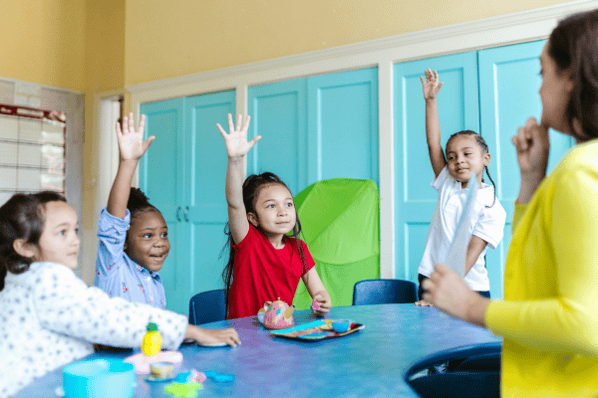
Universal pre-K refers to early childhood education programs designed to provide access to preschool for all children, typically four-year-olds. However, the definition and implementation of these programs can vary widely across states, leading to some confusion. While some states label their programs as "universal," they may still have eligibility requirements, such as income limits or geographic restrictions. Others truly offer pre-K access to all four-year-olds, regardless of these factors.
The differences don’t end there. The level of funding, program availability, and participation rates can vary significantly, making it challenging to create a clear, consistent picture of universal pre-K nationwide. Additionally, program updates and differences in how states report their data contribute to the inconsistencies in understanding what universal pre-K really means.
States with fully implemented universal pre-K for four-year-olds
Eight states plus Washington D.C. have programs that are fully implemented, meaning the program is available across the entire state (covering 98% or more of school districts) and has enough dedicated funding to meet the legal requirements for 2024-2025. Below are universal pre-K examples across the country.
Universal pre-K in Washington, D.C.
The District of Columbia operates one of the most comprehensive universal pre-K systems in the nation. Since 2009, D.C. has offered full-day pre-K for all three- and four-year-olds, with programs available in public schools, charter schools, and community-based centers.
D.C.’s model is widely regarded as the gold standard for universal pre-K in the U.S., providing high enrollment rates and demonstrating the long-term benefits of early education.
Universal pre-K in Colorado
In 2023, Colorado launched its new universal preschool program, guaranteeing 10–15 free hours per week for all four-year-olds, regardless of family income. Some three-year-olds with additional needs are also eligible.
The rollout is still in its early stages, but it represents one of the most ambitious expansions of pre-K in recent years, with the potential to serve tens of thousands of children statewide.
Universal pre-K in Florida
Florida’s Voluntary Prekindergarten (VPK) program, launched in 2005, guarantees free pre-K for all four-year-olds. Parents can choose between:
-
School-year program (540 instructional hours, max 20 children per class)
-
Summer program (300 hours, max 12 children per class)
-
Specialized services program (for children with disabilities)
While VPK is one of the largest and longest-running universal pre-K programs, its half-day schedule remains a major barrier for working families who need full-day care.
Universal pre-K in Georgia
Georgia pioneered the lottery-funded model in 1995, now serving 55% of four-year-olds through a mixed-delivery system where 60% of classrooms operate in private settings and 40% in public schools. The program provides full school days (6.5 hours daily for 180 days) with a $463 million annual investment.
Universal pre-K in Iowa
In 2007, Iowa launched the Statewide Voluntary Preschool Program (SVPP), which provides free preschool for all four-year-olds. Funding is distributed through local school districts, and programs must meet state quality standards. The program currently reaches about 64% of four-year-olds statewide.
It emphasizes high-quality teaching standards and partnerships with local schools and community-based providers to ensure wide accessibility.
Universal pre-K in Oklahoma
Oklahoma has been a pioneer in universal pre-K since 1998, with more than 70% of four-year-olds enrolled in publicly funded programs today. The program is considered a national model due to its widespread availability and quality standards.
Remaining challenges include ensuring access for rural families and addressing teacher shortages, but Oklahoma continues to be one of the strongest examples of statewide universal pre-K.
Universal pre-K in Vermont
Vermont offers universal pre-K for three- and four-year-olds, providing 10 hours of instruction per week for 35 weeks a year. Families can choose between public schools and approved private providers.
Although the part-day schedule creates challenges for working families, Vermont consistently enrolls a large share of its preschool-aged children. In 2024, about 76% of four-year-olds and 58% of three-year-olds were enrolled in the program, making Vermont one of the leaders in universal early education.
Universal pre-K in West Virginia
West Virginia is recognized as one of the first states to establish near-universal pre-K. Since 2013, every four-year-old in the state has been guaranteed access to free pre-K through a collaboration between public schools and community providers. The program is voluntary, but districts must offer it in at least four days a week or a full-day schedule, aligned with state early learning standards. According to the National Institute for Early Education Research (NIEER), West Virginia consistently ranks among the top states for enrollment. This makes it one of the strongest examples of a state delivering broad, equitable access to early childhood education.
Universal pre-K in Wisconsin
Wisconsin’s Four-Year-Old Kindergarten (4K) program is voluntary but nearly universal, with 99% of school districts offering it. Programs typically provide 437 instructional hours annually, often structured as half-day classes.
Unlike some states, Wisconsin requires 4K teachers to hold bachelor’s degrees, ensuring strong professional qualifications but potentially narrowing the pool of available educators.
States with in-progress universal pre-K initiatives
Universal pre-K and Transitional Kindergarten (TK) in California
California is rolling out one of the largest universal pre-K initiatives in the nation, centered on Universal Transitional Kindergarten (UTK). By the 2025–26 school year, all four-year-olds will be eligible for a free seat in nearly 900 school districts, making California’s program the largest universal pre-K system in the U.S.
The program builds on a modified kindergarten curriculum designed to be developmentally appropriate for younger children. While California has early learning standards, implementation has been uneven, and the state continues refining clear benchmarks for academic and social-emotional readiness.
Challenges remain:
-
Teacher shortages are limiting classroom capacity and after-school care programs.
-
Facilities upgrades (child-sized bathrooms, furniture, and playgrounds) are needed to accommodate younger learners.
-
Family awareness is uneven, with higher-income families more likely to know about and enroll in TK.
Despite these challenges, California’s universal pre-K effort represents a historic expansion and will reshape early learning nationwide.
Universal pre-K in New Jersey
New Jersey aims for universal access to free preschool in all districts by 2030, building on the successful "Abbott model" that previously served high-need districts.
The state's commitment shows in its funding increase: $551 million added since FY23, bringing total preschool investment to $1.26 billion in FY25. The mixed-delivery approach includes district-operated programs, private providers, and Head Start partnerships.
Universal pre-K in Michigan
Michigan is on a path to universal pre-K by 2027 under its PreK for All initiative. The state’s Great Start Readiness Program (GSRP) already provides free or low-cost preschool for many four-year-olds, but coverage is uneven.
Currently, about half of Michigan’s four-year-olds are enrolled in publicly funded pre-K. To reach the 2027 goal, the state must expand seats, recruit more qualified teachers, and improve access in underserved areas.
Universal pre-K in New York State and New York City
New York State’s Universal Pre‑K (UPK) program offers state- and federally funded, free preschool, available to all four-year-olds based on age and residency—no income eligibility required. In fiscal year 2024, the state approved an additional $100 million for UPK and $50 million for full-day Pre‑K expansion under the Statewide Universal Full‑Day Prekindergarten (SUFDPK) initiative. By 2023–24, approximately 75% of eligible four-year-olds were enrolled in UPK or SUFDPK programs across New York.
New York City's Pre‑K for All initiative began in 2014–15, offering free, full-day preschool for all four-year-olds, delivered through both public schools and community providers. It grew to serve around 68,000 children—tripling enrollment in its first year alone. Today, the city maintains a seat for every four-year-old, with high-quality, play-based curriculum and extended-day options available across district schools, Pre‑K centers, and community-based organizations. Building on its success, NYC also rolled out 3‑K for All, which provides universal, full-day preschool to three-year-olds—with plans to expand throughout the city.
Universal pre-K in New Mexico
New Mexico is emerging as a leader in early childhood education. Following a 2022 constitutional amendment, the state now dedicates permanent funding from its Land Grant Permanent Fund to expand access to pre-K, child care, and other early learning programs.
New Mexico’s model is a mixed-delivery system, combining public schools, community-based providers, and Head Start programs to expand access for all four-year-olds, with plans to include three-year-olds as well.
Universal pre-K in Hawaii
Hawaii is working toward universal pre-K access with a target date of 2032. The state is focusing on expanding access by increasing the number of pre-K classrooms and providing funding to support early childhood education programs. Their efforts aim to ensure all children are prepared for kindergarten and beyond.
Universal pre-K in Maryland
Maryland has set its sights on achieving universal pre-K by 2027. The state has laid out a funding plan through the Blueprint for Maryland’s Future, which prioritizes expanding access to high-quality pre-K programs for both low- and middle-income families.
Universal pre-K in Illinois
In 2023, Governor J.B. Pritzker unveiled Smart Start Illinois, a bold initiative to scale state-funded preschool access statewide by 2027. With an initial $440 million investment, the plan aims to add 5,000 preschool seats in its first year and ultimately create 20,000 new slots, closing enrollment gaps, especially in underserved communities.
By 2024, the Illinois State Board of Education had already added 5,886 new preschool seats in designated “preschool deserts” and provided $8.4 million in quality improvement grants—including salary boosts for early childhood educators and support outside regular school districts
Universal pre-K pros and cons
Early childhood education has many lasting benefits. It helps children learn and build skills related to the four major areas of development—physical, cognitive, language, and social-emotional.
Physically, preschool helps children develop the fine and gross motor skills that they use for holding a crayon or running. Their cognitive development presents as an increase in their thinking and reasoning, where they learn to count and recognize colors and shapes. A young child’s ability to name letters and numbers is a marker of their language development, while the social-emotional skills they learn help them share, make friends, and follow directions. These skills lay the foundation for their continued success as children and, ultimately, as adults.
It would likely be challenging to specify any cons of children receiving quality education; however, it’s necessary to note some of the drawbacks and benefits of building a universal pre-K system.
Drawbacks of universal pre-K
Overworked educators
Universal pre-K programs will likely have to abide by higher standards, set by the state, to receive funding. In California, for example, transitional kindergarten teachers are required to be fully credentialed, including having completed specific units in early education or childhood development.
While providing high-quality education is positive, lack of funding, often seen in educational institutions, leads to educators with little support in the classroom. This increase in duty can cause educators to become overworked and burn out. This is further complicated by the teacher staffing crisis faced in several states, so the shortage of teachers needs to be addressed in order to add another grade.
Impact on private childcare programs
The implementation of universal pre-K could negatively impact private childcare programs. They can potentially lose older children to publicly funded preschools, which correlates to a revenue loss. For example, California childcare providers are currently operating at up to 80 percent capacity, following the rollout of the TK program to younger students.
This lack of financial sustainability could also lead providers to reduce costs which will likely harm the program's quality. Without the revenue from older children in a program, private childcare programs might also face the difficult decision of closing down their business.
Benefits of universal pre-K
Preschool for all
In 2019, before the COVID-19 pandemic, the national preschool average for three to five-year-olds enrolled in preschool programs was 61%. More than half the country was operating at levels equal to or less than this average.
The greatest benefit of universal pre-K is that it gives more children access to quality education regardless of a child’s developmental abilities or their family’s ability to pay. This improves children's kindergarten readiness, which in turn brings positive social-emotional outcomes for students, and allows for the earlier identification of issues that can be addressed faster.
Diverse classrooms
Making preschool more accessible creates more diverse classrooms. The national average price of child care for 2024 was $13,128. These costs diminish the number of families that can afford childcare-related expenses. Universal pre-K promotes diversity, equity, and inclusion in education by making preschool programs available to families of different ethnicities, cultures, religions, and socioeconomic backgrounds.
The impact of universal pre-K goes beyond the classroom. While it can lead to an increase of people in the labor force, the question of funding and its implication of higher taxes fuels the universal pre-K opposition.
Challenges of implementing universal pre-K
Universal pre-K curriculum challenges
As universal pre-K expands, states are still working to define what a consistent, high-quality curriculum should look like. While many states — including California — have early learning standards, benchmarks for four-year-olds are still being refined and unevenly applied.
Outlining clear expectations in areas such as early literacy, numeracy, social-emotional development, and executive functioning will be crucial for ensuring children across all universal pre-K programs receive comparable preparation for kindergarten. Clear standards will also help clarify the role of pre-K and align expectations for families and educators.
Adapting facilities and staffing
Another challenge in expanding pre-K access is adapting school infrastructure and workforce capacity to serve younger learners. Many school buildings were designed for older students and lack child-sized bathrooms, age-appropriate playgrounds, and furniture scaled for four-year-olds.
At the same time, the demand for credentialed pre-K teachers has surged, creating workforce shortages in many districts. Addressing both space and staffing needs will be essential for scaling high-quality universal pre-K.
Expanding wraparound services
For working families, universal pre-K must also include access to before- and after-school care. Without these supports, many families cannot fully participate, undermining the equity and inclusivity goals of universal pre-K. Ensuring extended-day options and community-based partnerships will be critical for making the system work for all children.
The vital role of childcare providers in universal pre-K
Childcare providers serve as essential partners in delivering universal pre-K programs and ensuring successful expansion. Their contributions include:
- Program delivery expertise: Many providers already operate high-quality early learning programs and understand developmentally appropriate practices for four-year-olds.
- Community connections: Established relationships with families create trust and smooth transitions into formal education systems.
- Flexible scheduling options: Providers can offer wraparound care that extends beyond typical school hours, supporting working families.
- Mixed-delivery capacity: Private providers increase seat availability without requiring new public facility construction.
- Cultural responsiveness: Community-based providers often better serve diverse populations and maintain cultural connections.
- Specialized services: Many providers have experience serving children with disabilities, English language learners, and other specialized populations.
- Local accessibility: Neighborhood-based programs reduce transportation barriers and keep children close to home.
- Seamless transitions: Providers who serve multiple age groups can offer continuity as children move through early childhood programs.
- Innovation and flexibility: Private providers can often adapt programming more quickly to meet changing community needs.
- Resource efficiency: Utilizing existing provider capacity maximizes public investment while maintaining program quality.
The success of universal pre-K depends heavily on robust partnerships between public agencies and community-based childcare providers, creating networks that serve all families effectively.
Preschool for all
As universal pre-K expands, more children gain access to the benefits of high-quality early education—stronger school readiness, better long-term outcomes, and greater equity. States like Oklahoma and Florida show the impact of established programs, while California, Colorado, and Michigan are leading new efforts. Challenges with funding, staffing, and access remain, but with continued investment and focus, universal pre-K can deliver on its promise of brighter futures for all children.
Frequently asked questions about universal pre-K
What is universal pre-K?
Universal pre-K (also called preschool-for-all) is a publicly funded program that guarantees access to high-quality early education for all four-year-olds, regardless of family income, location, or background. Some states, like Vermont and Washington, D.C., also extend universal pre-K to three-year-olds.
What are the benefits of universal pre-K?
Research shows universal pre-K improves kindergarten readiness, supports early literacy and math skills, and promotes social-emotional development. Long-term studies, such as the Boston pre-K lottery research, also found participants were more likely to graduate high school, attend college, and avoid disciplinary issues later in life.
How is universal pre-K different from traditional preschool?
Traditional preschool is often private and tuition-based, while universal pre-K is publicly funded and available to all eligible children in a state or district. This makes it more equitable by removing financial barriers for families.
What challenges do universal pre-K programs face?
Common challenges include recruiting enough qualified teachers, adapting school facilities for younger children, funding full-day programs, and ensuring equitable enrollment across all communities. These issues are key areas of focus as more states roll out universal pre-K.