.svg)
Deciding the right preschool age for your child can feel overwhelming. While most children start between 3 and 4, age alone doesn't determine readiness. Your little one's emotional, social, and developmental milestones matter more than the number on their birth certificate.
This article will help you determine if your child is ready for the classroom by looking at key readiness signs, practical considerations, and what to do if they need more time.
In this article, we'll cover:
- Emotional readiness and separation anxiety
- Key social and physical milestones
- Practical considerations like potty training and communication skills
- What to do if your child isn't quite ready yet
- Benefits of starting at the right age
Is your child preschool-ready? A quick checklist
Before diving into the details, use this quick checklist to gauge your child's readiness:
- Can they spend time away from you without extreme distress?
- Do they show interest in playing with other children?
- Are they mostly potty-trained? (Check your preschool's policy!)
- Can they follow simple, two-step instructions?
- Are they curious and asking questions about the world?
- Can they communicate basic needs and wants?
If you checked most of these boxes, your child might be ready regardless of their exact age. If not, don't worry—every child develops at their own pace.
Programs that use brightwheel's communication app can build quality relationships with families and monitor children's progress and learning milestones. Teachers and families can easily interact with real-time messaging and families can get daily progress reports delivered right to their phone!
Is your child comfortable being away from you?
Separation anxiety is completely normal, but extreme distress can make the preschool transition difficult for everyone involved. Watch how your child handles brief separations. Do they recover quickly when you leave them with a babysitter or family member? Can they play independently for short periods?
Some tears on the first day are expected, but children who are ready for preschool typically adjust within a few weeks. If your child becomes inconsolable when separated from you, they might benefit from more time at home or gradual exposure to shorter separations first.
Consider arranging playdates or short visits to the preschool before starting. This helps your child become familiar with new environments and people while you're still nearby.
How does your child play with others?
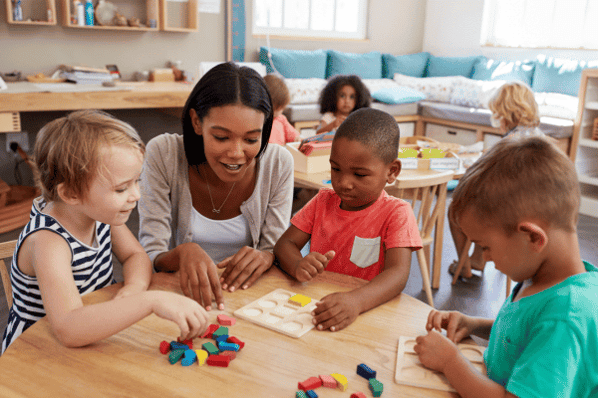
Social development varies significantly during the preschool age years. Three-year-olds might still engage in "parallel play"—playing side-by-side with others without much interaction, like two children digging in a sandbox without talking to each other. This is perfectly normal, but most preschool activities are built around cooperative play.
Look for signs that your child is ready for more interactive play:
- They share toys willingly (at least sometimes)
- They show interest in what other children are doing
- They can take turns, even if they need reminders
- They express empathy when another child is upset
Children who hit, bite, or have frequent meltdowns during social situations might need more time to develop these skills at home.
Does your child need to be potty-trained for preschool?
Potty training requirements vary by preschool. Some programs accept children in diapers, while others require full potty independence. Most fall somewhere in between, expecting children to be mostly trained with occasional accidents.
Before enrolling, ask potential preschools about their specific potty training policies. If your child isn't fully potty-trained yet, focus on these skills:
- Telling you when they need to use the bathroom
- Sitting on the potty independently
- Pulling pants up and down with minimal help
- Washing hands after using the bathroom
Remember, accidents happen. The key is whether your child can communicate their needs and participate in the process.
Can your child communicate their basic needs?
Clear communication becomes crucial when you're not there to interpret your child's signals. By the typical preschool age, children should be able to:
- Ask for help when needed
- Express when they're hungry, thirsty, or need the bathroom
- Use words instead of hitting or crying to solve problems
- Follow simple, two-step instructions like "Put on your shoes, then get your backpack"
If your child is still largely non-verbal or struggles with basic communication, consider speech therapy or waiting until their language skills develop further.
Benefits of starting preschool at the right age
When children start preschool at the appropriate developmental stage, they're more likely to have positive experiences that set them up for success. Benefits include:
- Academic preparation: Preschool introduces pre-literacy and math concepts through play-based learning. Children practice recognizing letters, counting, and following structured activities that prepare them for kindergarten.
- Social skills development: Regular interaction with peers teaches sharing, cooperation, and conflict resolution. These skills become the foundation for healthy relationships throughout life.
- Independence building: Preschool encourages children to complete tasks independently, from washing hands to cleaning up toys. This builds confidence and self-reliance.
- Routine and structure: The predictable schedule of preschool helps children learn to transition between activities and understand expectations, skills that benefit them in all future educational settings.
What if the typical preschool age isn't right for my child?
Not every child is ready for preschool at 3 or 4, and that's perfectly fine. Some children thrive with an extra year at home, while others might be ready earlier than expected.
If your child needs more time:
- Focus on developing the skills mentioned above through play and daily routines
- Arrange regular playdates to practice social skills
- Consider a part-time program or parent-child classes as stepping stones
- Work with your pediatrician if you have concerns about developmental delays
If your child seems ready early:
- Look for programs that accept younger children
- Ensure they meet physical milestones like walking steadily and basic self-care
- Consider starting with shorter days or fewer days per week
Trust your instincts as a parent. You know your child better than anyone else.
Making the right choice for your family
Choosing the right preschool age involves more than just developmental readiness. Consider your family's needs, work schedule, and financial situation. Some families need childcare regardless of readiness, while others have the flexibility to wait.
Remember that preschool isn't mandatory. Some children do beautifully starting kindergarten without formal preschool experience, especially if they've had rich learning experiences at home and regular social interactions.
The most important factor is ensuring your child feels supported, confident, and excited about learning—whether that happens at 2, 3, 4, or 5 years old.
Frequently asked questions
What is the average preschool age in the US?
Most children in the United States start preschool between ages 3 and 4, with 4-year-olds making up the largest group enrolled in preschool programs.
Can my 2-year-old start preschool?
Yes, many programs accept 2-year-olds, though they typically require children to be potty-trained and able to separate from parents. Two-year-old programs often have smaller class sizes and more individualized attention.
Is it better to start preschool at 3 or 4?
The best age depends entirely on your child's individual development and your family's needs. Some children benefit from the extra year of social and emotional development that comes with starting at 4, while others thrive with the earlier start at 3.
What skills should my child have before starting preschool?
Key skills include basic communication, some independence with self-care tasks, ability to separate from parents for a few hours, and beginning social skills like sharing and taking turns.
Bottom line
Determining the right preschool age for your child requires careful consideration of their unique developmental timeline, your family's needs, and available program options. Focus on readiness signs rather than chronological age, and remember that every child develops at their own pace.