.svg)
The Child and Adult Care Food Program (CACFP) helps childcare programs provide nutritious meals to children. However, meeting its requirements involves detailed meal planning and tracking, which can create a lot of paperwork.
Using CACFP software simplifies these tasks by streamlining menu planning, automating record-keeping, and generating reports for reimbursement. This article will walk you through the CACFP requirements and explain how dedicated software can help your program save time and stay compliant.What is CACFP software?
CACFP software is a specialized tool designed to help childcare programs manage the administrative tasks required by the Child and Adult Care Food Program. Instead of using paper forms or generic spreadsheets, this software automates the process of meal tracking, menu planning, and creating compliance reports.
Key features typically include:
-
- Digital meal and snack logging
- Customizable menu planning tools
- Automated reporting for reimbursement claims
- Real-time updates for families on their child's nutrition
Understading the Child and Adult Care Food Program (CACFP)
What is the CACFP?
The CACFP is a federal nutrition program from the United States Department of Agriculture (USDA) that provides reimbursements to childcare programs for serving nutritious meals and snacks to eligible children.
In 2023, 13.5% of U.S. households were food insecure, meaning 18 million households couldn’t access sufficient food to meet the dietary needs of household members due to insufficient resources. These statistics indicate that many children in the U.S. don’t get the nutrition they need to grow and thrive. Since good nutrition habits start at a young age and are essential for growth and development, childcare providers often partner with the USDA to give children access to healthy meals and snacks through the CACFP.
The CACFP is administered by USDA's Food and Nutrition Service (FNS) through grants to states. In most states, the state educational agency administers the program. In other states, it’s administered by a different agency, like the state social services or state health department.
Who is eligible for CACFP meals?
The children eligible to receive meals under the CACFP include:
- Children under 12 years old enrolled in daycare homes or childcare centers
- Children (age 15 and under) of migrant workers
- Children with disabilities (determined by the state) and enrolled in a facility serving persons aged 18 and under
- Children aged 18 and under in emergency shelters
- Children aged 18 and under enrolled in after-school care centers
- Provider’s children in tier 1 day care homes (located in low-income areas, or those in which the provider's household income is at or below 185 percent of the federal income poverty guidelines) where other children are participating in the program
How does reimbursement work?
To receive reimbursement, participating programs must submit accurate monthly claims to their state agency. The USDA will reimburse based on the CACFP reimbursement rates that are adjusted annually.
The USDA will not reimburse childcare programs for the following:
- Meals or snacks served to children who aren’t enrolled in care
- Meals that aren’t approved in the agreement
- Meals served in excess (beyond authorized capacity)
- Meals that don’t comply with meal pattern requirements
Brightwheel makes it easy to meet CACFP requirements. Create and customize food menus to meet nutritional guidelines and accurately log food activities for individual or all students with the tap of an icon. You can even consolidate meal tracking in one easy-to-view report and export menu reports to submit for CACFP reimbursement.

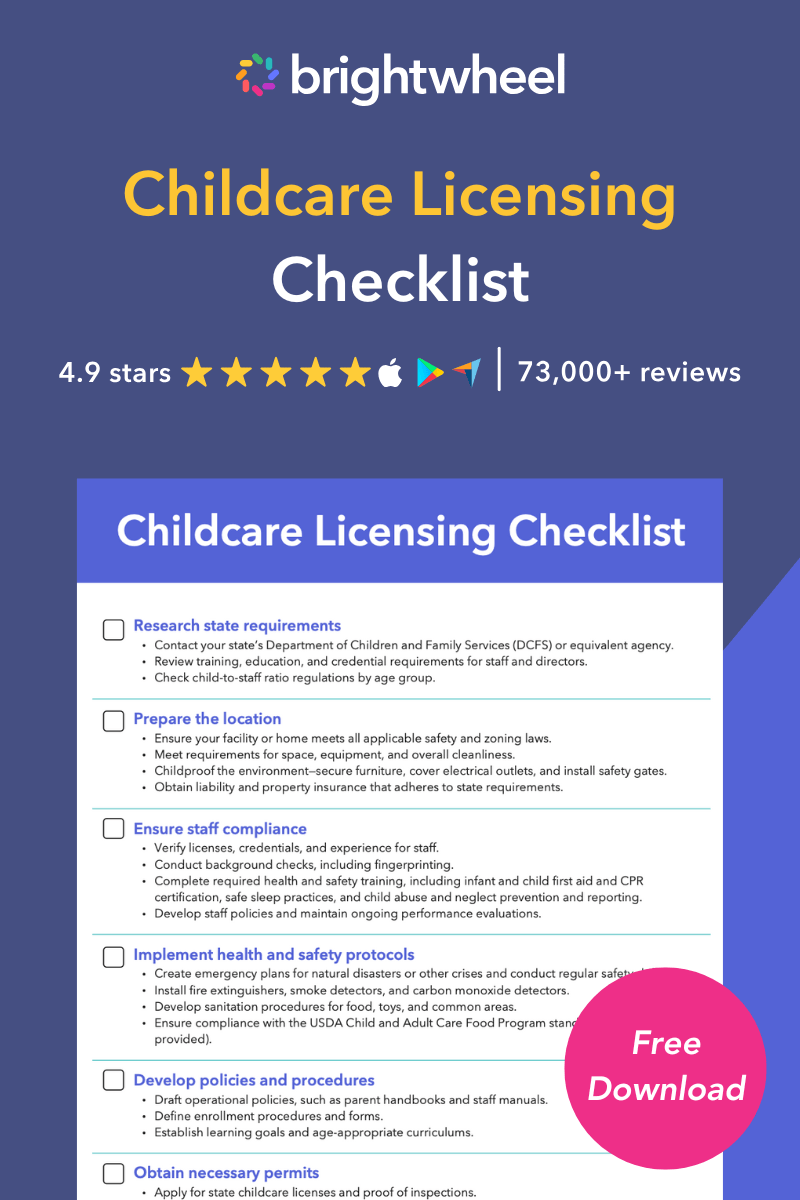
Childcare Licensing and Compliance Checklist
Download this free checklist to simplify the childcare licensing process.
CACFP meal pattern requirements
Children must be served meals and snacks that comply with the CACFP meal patterns. The CACFP will only reimburse participating programs for creditable foods. These foods meet the meal pattern requirements and comply with Child Nutrition Programs regulations, the U.S. Food and Drug Authority (FDA) Standards of Identity, and USDA standards for meat/meat products. The five main food components that make up the menu are fluid milk, meat/meat alternatives, vegetables, fruits, and grains.
The CACFP child meal pattern indicates the minimum quantities of each food component that centers must serve children according to their age. For example, for breakfast, children between the ages of three and five must be served the following:
- 6 fl oz or ¾ cup of low-fat (1%) or fat-free, unflavored liquid milk
- ½ cup of vegetables/fruits or portions of both
- ½ oz equivalent of whole grain-rich bread or bread product
As a general rule, breakfast must include a minimum of fluid milk, vegetables or fruits (or both), and grains, while lunch and dinner must contain all five food components.
What is on the CACFP-approved food list?
The CACFP-approved food list includes the following:
Fluid milk
For breakfast, lunch, and dinner, each child must be served pasteurized milk containing FDA-approved levels of vitamins A and D.
Providers must serve:
- Unflavored low-fat (1%) or skim milk to children aged two and older
- Flavored low-fat (1%) milk is permitted for children aged six and older
CACFP best practices recommend that providers use the Nutrition Facts Label to ensure that the flavored milk contains 22 grams of sugar or less per 8 fluid ounces.
Meat/meat alternatives
Meat and meat alternatives contain protein that supports children’s growing muscles, iron that helps circulate oxygen within the blood, and healthy fats for brain and heart health.
The recommended fresh and frozen meats include:- Lean beef
- Poultry
- Fish
- Pork
- Shellfish
Canned meats include:
- Tuna
- Chicken
- Salmon
Meat alternatives include:
- Nuts
- Eggs
- Yogurt
- Cheese (natural and low-fat/reduced-fat)
- Seeds/seed butters
- Peas
- Beans
- Tofu
The CACFP best practices recommend serving lean meats, nuts, and legumes and limiting processed meats like deli meats, chicken nuggets, and fish sticks to one serving per week.
Fruit
Providers must serve participants whole fruits, which can be fresh, canned, frozen, or dried. They can also serve 100% fruit juice; however, participants must be served more fruits than juice.
Vegetables
Providers may serve fresh, frozen, dried, and canned vegetables and 100% vegetable juice. The vegetables may be raw or cooked, cut up, mashed, or whole. CACFP best practices recommend providing participants with at least one serving of starchy vegetables, dark green leafy vegetables, red and orange vegetables, and other vegetables per week.
Grains
It’s best practice to provide two daily servings of whole grains, which may include:
- Bread and bread products such as bagels, tortillas, rolls, or muffins
- Cereal grains such as brown rice, buckwheat, quinoa, or bulgur
- Snacks like crackers, pretzels, popcorn, or tortilla chips
- Pasta
- Cooked breakfast cereals like oatmeal
Look for “whole grain” on the food label or ingredient list. Some whole grain products may have a whole grain stamp. However, remember that words like cracked wheat, bran, 100% wheat, and multi-grain may not necessarily mean whole grain.
How brightwheel streamlines CACFP management
Staying compliant with CACFP regulations requires careful organization. Childcare programs need a centralized tool to plan menus, track meals, and report data accurately.
Software like brightwheel streamlines the menu planning and food tracking process and easily collects data for CACFP compliance and reimbursements. With brightwheel's CACFP software capabilities, you can:
- Plan compliant menus: Easily add food items and organize them by category to create detailed menus for each age group.
- Track meals accurately: Staff can log food activities for individual children or entire groups with a single tap, creating essential data for CACFP reporting.
- Simplify reporting: Consolidate your meal tracking into one easy-to-view report and export it to submit for reimbursement.
- Keep families informed: Share real-time updates, photos, and daily activity reports to keep families connected to their child’s day.